Dandadan
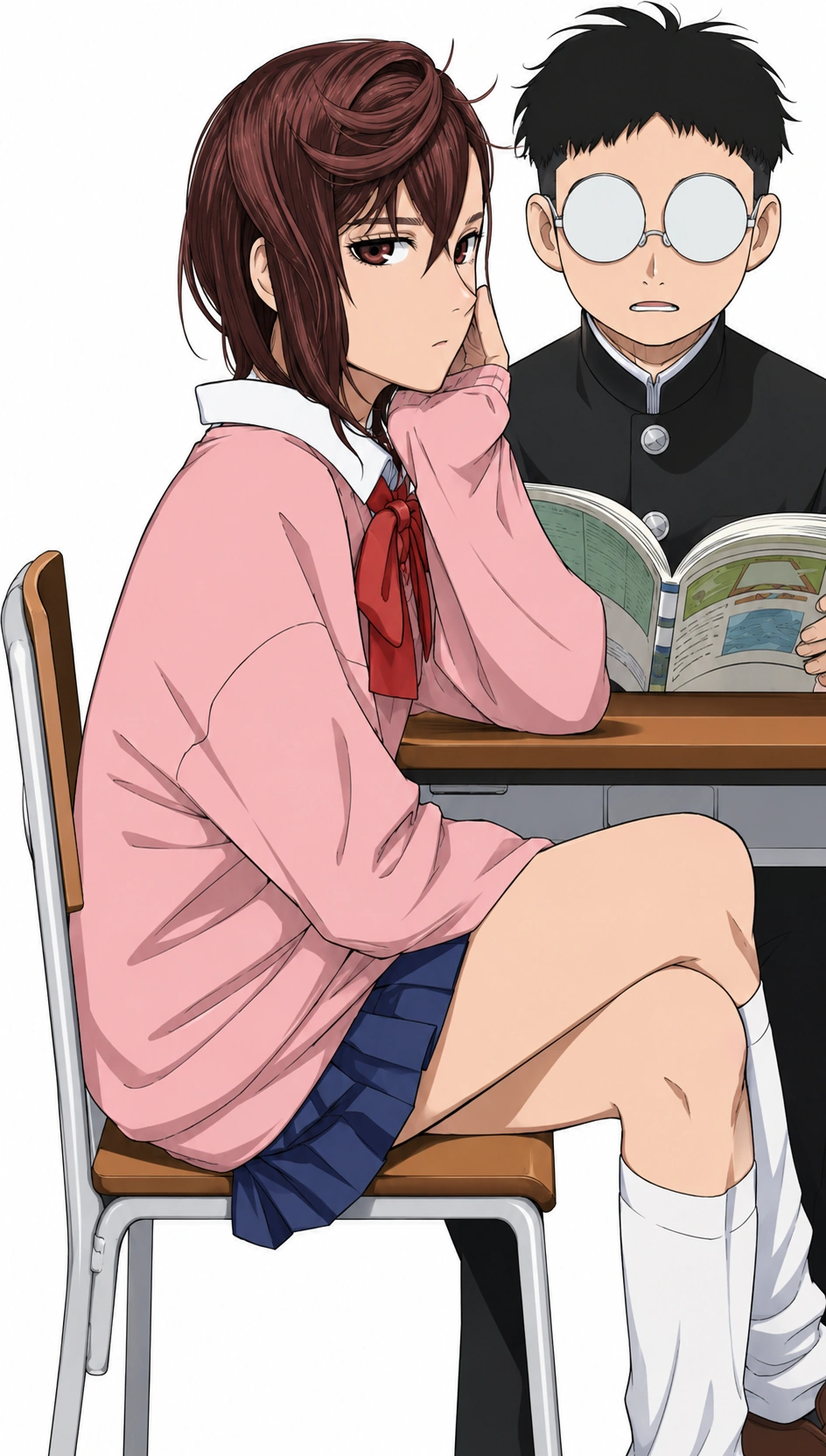
Dandadan (ダンダダン) is a manga by Yukinobu Tatsu that blends supernatural horror, science fiction, and teenage romantic comedy. The story follows Momo Ayase — a girl who believes in spirits but not aliens — and Ken "Okarun" Takakura — a boy who believes in aliens but not spirits. They make a bet to prove each other wrong. Both are immediately proven correct: Momo is abducted by aliens, Okarun is cursed by a yokai.
What starts as a localized ghost hunt rapidly escalates into a planetary defense crisis, eventually pulling in 82 confirmed alien species, the 13 Noble Families — ancient supernatural dynasties collecting yokai powers for an impending global war — and one deeply suspicious faculty advisor with unknown motives. The series is defined by its creator's approach to occultism as "intellectual entertainment": rigorously technical combat systems, genuine pseudo-scientific logic applied to urban legends, and awkward teenage romance threaded through all of it.
Tatsu applies that same rigor to the world's internal mechanics. Combat speed is measured by the Piano Beat Theory — how many actions an entity can fit into a single musical beat. Spiritual energy is governed by Spintronics, the principle that all creation from DNA to the Milky Way operates on spirals, with left-rotating force used to unleash power against physical enemies and right-rotating force used to contain ethereal ones. Alien civilizations bring Nanoskin — an ultrahigh-density alloy that responds to brainwaves, letting users manifest complex machinery through visualization alone. These are not window dressing. The series expects you to understand how they work and uses them to build fights that have genuine tactical logic underneath the chaos.
Underneath the technical spectacle, Dandadan is a story about social outsiders finding each other. Okarun was the school loner before a yokai made him relevant. Momo's medium lineage was the reason she had no friends. The group they build — the History and Culture Research Club — is a found family of mediums, alien exiles, delinquents, and one cursed childhood friend, held together by shared trauma and the specific warmth of people who know what it feels like to be the person nobody wanted around. The series never stops being funny. It also never forgets that the comedy lives inside something real.
The universe of Dandadan operates on a principle of Concurrent Duality: the majority of humanity is oblivious to the paranormal, while the Earth itself sits at the intersection of an ancient spiritual ecosystem and an active intergalactic resource conflict. Ghosts are real. Aliens are real. The two factions are fighting over the same planet for different reasons, and ordinary humans are caught in the middle.
The Dual Reality Framework
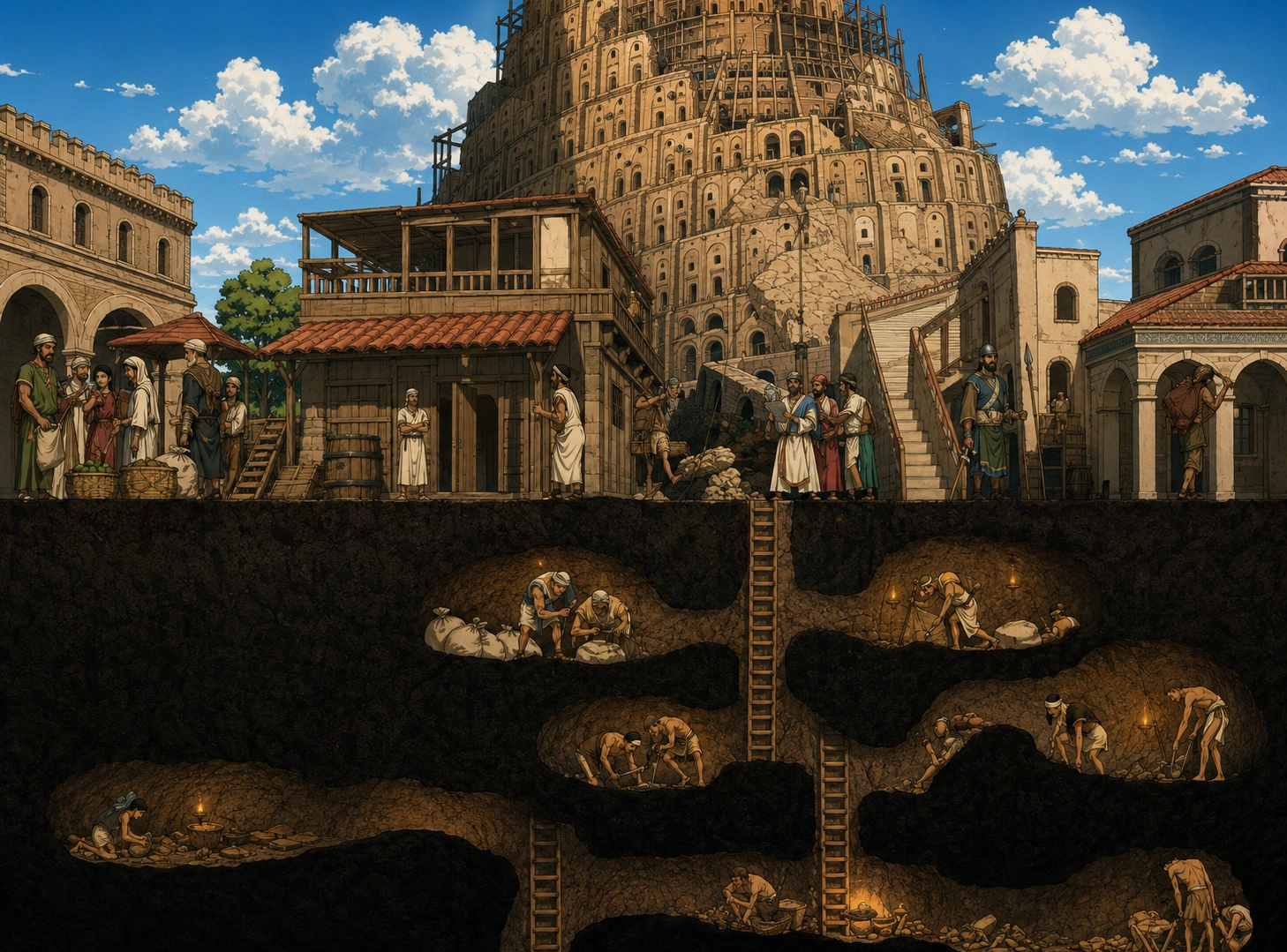
For centuries, Earth has been observed by 82 confirmed alien species, according to documents attributed to former Canadian Defense Minister Paul Hellyer — a real historical figure the series incorporates directly into its lore. These species view Earth as a high-value resource of spiritual life force energy. Full-scale colonization has been historically prevented by the existence of Yokai.
Spirits and demons function as Earth's "Indigenous Defense System." Because Yokai are born from human history, resentment, and deep-seated regret, they possess a spiritual frequency that interferes with and neutralizes alien technology. This creates a stalemate: aliens must rely on covert abductions, "mummy" human suits, and specific psychokinetic zones to operate without attracting lethal spiritual attention.
The Theory of Commonality
A central tenet of Dandadan's lore is that ghosts and aliens are not separate phenomena but different human interpretations of the same high-energy extra-dimensional events. Entities like the Flatwoods Monster display characteristics of both an alien (technological mist dispersal) and a spirit (requiring exorcism-style containment). The series consistently refuses to treat the supernatural and the extraterrestrial as mutually exclusive.
Spiritual Laws — Territory and Bound Spirits
Supernatural entities are categorized by their relationship to geography. Bound Spirits are entities whose power is intrinsically tied to a specific location they haunt — within their territory, they are essentially invincible to standard spirit mediums. Combat effectiveness is determined by whether an entity is "playing a home game or an away game."
Spirit mediums can only combat high-level Yokai by either luring them out of their territory or by "borrowing" the power of the local deity (God of the Region) that governs that specific city or shrine. Even a master medium like Seiko loses most of her offensive barrier capabilities once she crosses the city limits of Kamikoshi City.
The "Socially Vulnerable" — Pygmies and Fairies
A unique class of spiritual entity exists in the margins of society: Pygmies (also called Fairies) are spirits of people who were "societally weak" or forgotten by the world. They become tiny, invisible presences driven by a desperate need for acknowledgement. Crucially, they only become visible to humans who also feel isolated or socially vulnerable — and once they target a susceptible person, they may shrink the victim or isolate them in pockets of reality where normal supernatural rules are distorted.
Extraterrestrial Systems — The Mummy Theory
Because Earth possesses heavy gravity and abundant moisture, most alien species cannot survive in their true forms. To operate on Earth's surface, they use Mummies — preserved or harvested human bodies worn as organic environmental suits. The Mummy-Whale Hybrid represents the next evolution of this: biological engineering that blends Earth's fauna with alien technology to create heavy-gravity combat units.
Key Locations
- Kamikoshi City — The primary setting and a mystical "Sanctuary." Its safety is maintained by Seiko's barrier, borrowed from the local gods, and the History and Culture Research Club's active defense.
- The Nagi Hospital — A designated UFO hotspot and alien abduction zone. Its isolated spiritual frequency makes it the primary landing site for Serpoian research operations.
- The Cursed Wicker Trunk — A "Deadly Magic Object" containing a self-contained pocket dimension where inhabitants become literal game pieces. Time flows at a different rate inside: one hour in the real world equals multiple days within the diorama.
- Shimane / Tsuchinoko Shrine — A rural region dominated by the legend of the Great Snake Lord (a subterranean cryptid), governed by the Kito Family, who maintained 200 years of prosperity through human sacrifice.
World Phase Progression
The world of Dandadan has evolved through three identifiable phases: an Urban Phase (localized yokai and urban legends), an Invasion Phase (planetary defense against intergalactic colonizers), and a Conspiracy Phase (global power struggle between ancient noble dynasties and paranormal collectors). Humanity is caught between the technological coldness of the Serpoians, the ancient malice of Bound Spirits, and the systemic greed of the 13 Noble Families.
The power system of Dandadan is defined by its creator as "intellectual entertainment" — a rigorous, pseudo-scientific architecture that treats spiritual and alien phenomena as different manifestations of the same high-energy extra-dimensional activity. Abilities are categorized into three primary frameworks: inherent psychokinetic mediumship, yokai-derived curses and possessions, and hyper-advanced alien engineering.
I. The Foundation — Chi and Psychokinesis
Spiritual power in the Dandadan universe is latent in most humans until it is "opened" through external stimulus or lineage. Psychokinesis is the primary ability of spirit mediums: the user visualizes and projects spectral hands or auras to seize control of objects, spirits, or physical matter.
- Awakening: Latent potential can be artificially unlocked through the stimulation of brainwaves via alien technology — as seen during Serpoian abductions.
- The Power of Words: Spiritual attacks are significantly enhanced by arcane vocalization — using specific commands with deep emotional intent makes attacks more powerful and stable.
- Chi (Ki): The internal life force that powers spiritual techniques. Accessed by gathering energy at a point below the navel and visualizing it beaming from the crown of the head. High-tier fighters clad themselves in Chi to withstand attacks that would normally destroy a human body.
II. Spintronics — The Physics of Spiritual Rotation
The fundamental law of Dandadan's power system is Spintronics: all creation — from DNA to typhoons to the Milky Way — is governed by spirals. Spiritual energy is stabilized and projected through rotation.
- Left-Rotating (L-Form): "Loosening Force" — technically effective against corporeal (physical) enemies.
- Right-Rotating: "Containing Force" — the specific counter for ethereal (spirit) enemies who exist in a loose, smoke-like state.
- The Spinning Top Principle: Spiritual power can only maintain force while in constant rotation. A fighter who stops spinning loses their output entirely.
III. Yokai Abilities — Curses, Possessions, and Territory
Yokai powers are external spiritual forces that inhabit a human host through curses or possession. High-level yokai like the Turbo Granny can place a curse that grants a demonic transformation — supernatural speed, regenerative hair, physical mutation. Curses are transmissible and tied to deals: returning a stolen "family jewel" fulfills a contract and removes the curse.
Spirits can also possess humans as vessels, though the biological cost is extreme. Ordinary humans die when possessed by high-level yokai as their cells break down. Only "Prodigies" — individuals with rare formidable spiritual power and athletic bodies — can host high-tier yokai without immediate physical collapse.
IV. Alien Technology — Nanoskin and Combat Metrics
Nanoskin is an ultrahigh-density nano-machine alloy responsive to human brainwaves. It takes the shape of whatever the user visualizes with sufficient mental clarity — from complex machinery to giant robots. It can also repair organic tissue on a cellular level, though this puts a heavy mental load on the user. If the user's visualization wavers, the construct collapses.
Alien combat units are measured through official Pentagon Stat Charts across five metrics: Attack, Defense, Mobility, Ferocity, and Suit Abilities. Notable Serpoian units include:
- Ta Koshin Joe — Super-heavy class, maximum Attack/Defense. Motto: "Might is Power."
- Ta Kowasa — Six-arm power-draining specialist. Motto: "Leave work on time."
- Imotako — Extra-dimensional puppeteer. Motto: "Walls have ears. Shoji have eyes."
- Suda Ko — Multi-angle electromagnetic sniper. Motto: "One good deed per day."
V. The Piano Beat Theory
Combat speed is not measured in raw velocity but in how many "notes" (actions) an entity can fit into a single musical beat. High-tier entities like the Turbo Granny and the Evil Eye achieve a density of actions per beat that is physically impossible for average fighters to match or even track. Proficiency is determined by "switching density" — how many times a fighter can change actions within one beat.
VI. Power Inheritance, Awakening, and Theft
Powers are rarely innate — they are retrieved, awakened, or stolen through specific rituals:
- The Family Jewels: Repositories of spiritual life force. If a human picks one up, it can artificially awaken their psychokinetic abilities and grant them the ability to see spirits.
- Kozuka Knives: Cursed artifacts used to gather and transfer yokai powers. Critically: a person's abilities cannot be stolen simply by stabbing them. The victim must "surrender from the bottom of their heart" for the transfer to succeed.
- Intrinsic Power Rituals: Six specific folklore curses (Hansel and Gretel, Alice in Wonderland, Snow White, The Little Mermaid, Pinocchio, Little Red Riding Hood) can be extracted to create an "Ultimate Yokai."
VII. Limitations and Costs
- Transformation Fatigue: Cursed users can initially go "all out" only twice per day before the physical strain becomes unbearable.
- Energy Depletion: High-output psychokinetic attacks have extremely short range and leave the user completely defenseless afterward.
- Biological Destruction: Repeatedly drawing maximum power from a possessed human body can "completely destroy" the host.
- Inter-World Rules: Humans should not eat things from other dimensions — doing so produces permanent physical changes to the body.
VIII. The Ogre Club — Chi Without a Curse
Following Okarun's permanent return of the Turbo Granny's powers in Chapter 165, a new combat methodology emerged for non-cursed humans: the Ogre Club. A spiritually charged stick provided by Seiko, it must be charged with the user's own internal Chi. The club can grow in size and weight based on the user's focus — effectively creating a weapon that scales with the fighter's resolve rather than any external curse. It is Okarun's proof that mastery over one's own Chi is a viable alternative to supernatural possession.
A constant struggle between terrestrial spiritual practitioners, ancient noble dynasties, and intergalactic colonizers — all pursuing different claims on Earth's life force and supernatural resources.
The History and Culture Research Club (The Protagonists)
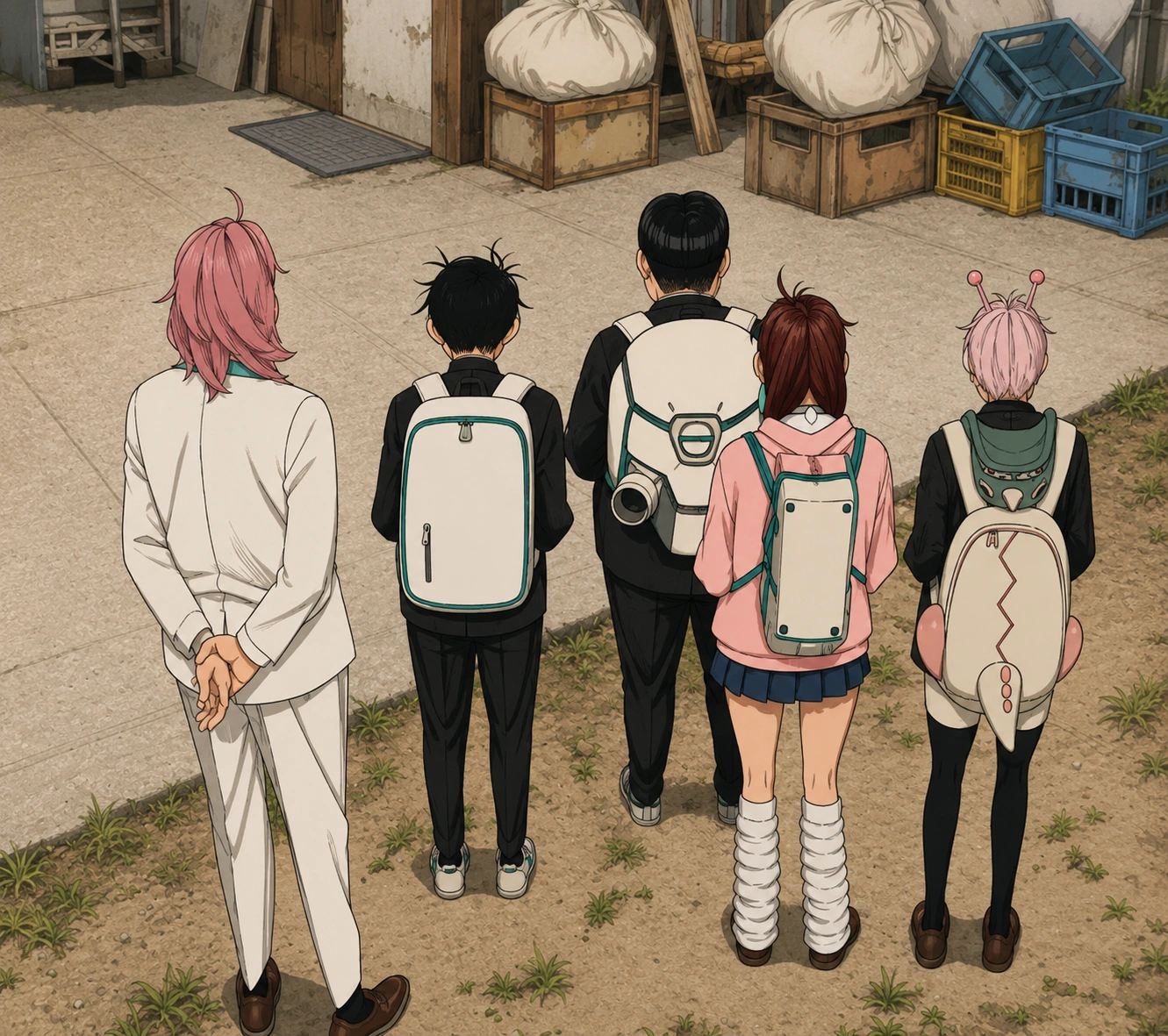
Established formally in the school registry to provide a base of operations, this organization serves as the primary defense force for Kamikoshi City. Its stated mission is the study of "the mysterious and unexplained." Its actual mission is the retrieval of Okarun's family jewels and the defense of Earth from everything that wants them.
The club is Dandadan's "found family" unit — a deliberate merger of disparate backgrounds: spirit mediumship (Momo), alien technology expertise (Kinta), delinquent leadership (Zuma), and cursed possession (Jiji). They are supported by Seiko and her disciple Manjiro for spiritual tools, and maintain a precarious alliance with the Serpoian Rokuro for technical data and combat simulation.
The Black Paladins and the 13 Noble Families
A global conglomerate of 13 prominent supernatural dynasties distributed worldwide. These ancient families have infiltrated urban areas and major corporations, employing "diviners" — exorcists who use paranormal curses to give business advice or destroy commercial rivals. Their shared ideology: world conquest through the systematic collection of yokai powers.
- The Delacroix Family: The most aggressive dynasty, currently led by Sir Vlad, who seeks to become supreme among the 13 families by acquiring "Intrinsic Yokai Power."
- The Dragon Knights: The Black Paladins' elite combat unit. Members include Lord Red (The Red Baron), Jack Wisp, Vakappa, and Shinobi. They have designated Okarun a "priority target."
The Guild of Exorcists (Sorcerers Association)
A formalized terrestrial body of spiritual practitioners. They monitor "Yokai suitability," investigate criminal paranormal activity, and provide the series' world with its standardized spiritual tools and technical documentation. They function as the "Technical Manual" for how supernatural power is classified and regulated. Currently investigating the widespread theft of powers through cursed Kozuka knives.
The Serpoians
An all-male species from Planet Serpo whose primary motivation is the acquisition of human reproductive data to sustain their cloning civilization. Initially aggressive toward the protagonists, they have shifted toward survival and research. Their ally within the club is Rokuro, who provides technical data and combat simulators. The Serpoians represent the series' most pragmatic alien faction — dangerous when threatened, useful when aligned.
The Globalists — 82 Alien Species
The main intergalactic invasion force comprised of the 82 confirmed alien species observing Earth. Their goal: harvest Earth's unique life force energy. Their tactical method: Nanoskin-equipped heavy-gravity combat units and Mummy biological suits. Their primary obstacle: the indigenous Yokai defense system that interferes with their technology. Alien factions increasingly attempt to steal or replicate yokai abilities specifically to bypass this barrier.
The Kito Family
A regional antagonist faction based in Shimane. For 200 years, the clan maintained local prosperity through the ritual sacrifice of children to the Great Snake Lord. They possess deep connections within the police and the Black Paladins, allowing them to operate as a functioning cult with impunity. They recently attempted to hijack an aircraft to secure new sacrificial victims.
Count Saint-Germain — The Collector
An independent, third-party high-level entity acting as the History and Culture Research Club's faculty advisor under the alias Mr. Sanjome. He is neither clearly human nor alien, and his actual origin is one of the series' most active mysteries. His goal: possession of every enchanted object, UFO, and yokai power in existence. He is currently manipulating both the protagonists and the Noble Families to extract the intrinsic power of folklore and create an "Ultimate Yokai." He views the club's members not as students but as "data" and "chosen ones."
Faction Relationship Map
| Faction | Goal | Relationship to Club |
|---|---|---|
| History & Culture Research Club | Recover jewels; defend Earth | Protagonists |
| Black Paladins / Noble Families | Collect yokai power; world conquest | Primary antagonists (current arc) |
| Serpoians | Human reproductive research; survival | Precarious allies |
| Globalists (82 Species) | Harvest Earth's life force | Hostile; ongoing threat |
| Guild of Exorcists | Monitor / regulate paranormal activity | Neutral / technical authority |
| Count Saint-Germain | Collect all paranormal phenomena | Manipulative; unclear agenda |
| Kito Family | Maintain sacrificial prosperity ritual | Regional antagonists; defeated |
1. Momo & Okarun vs. Turbo Granny — Chapters 5–8
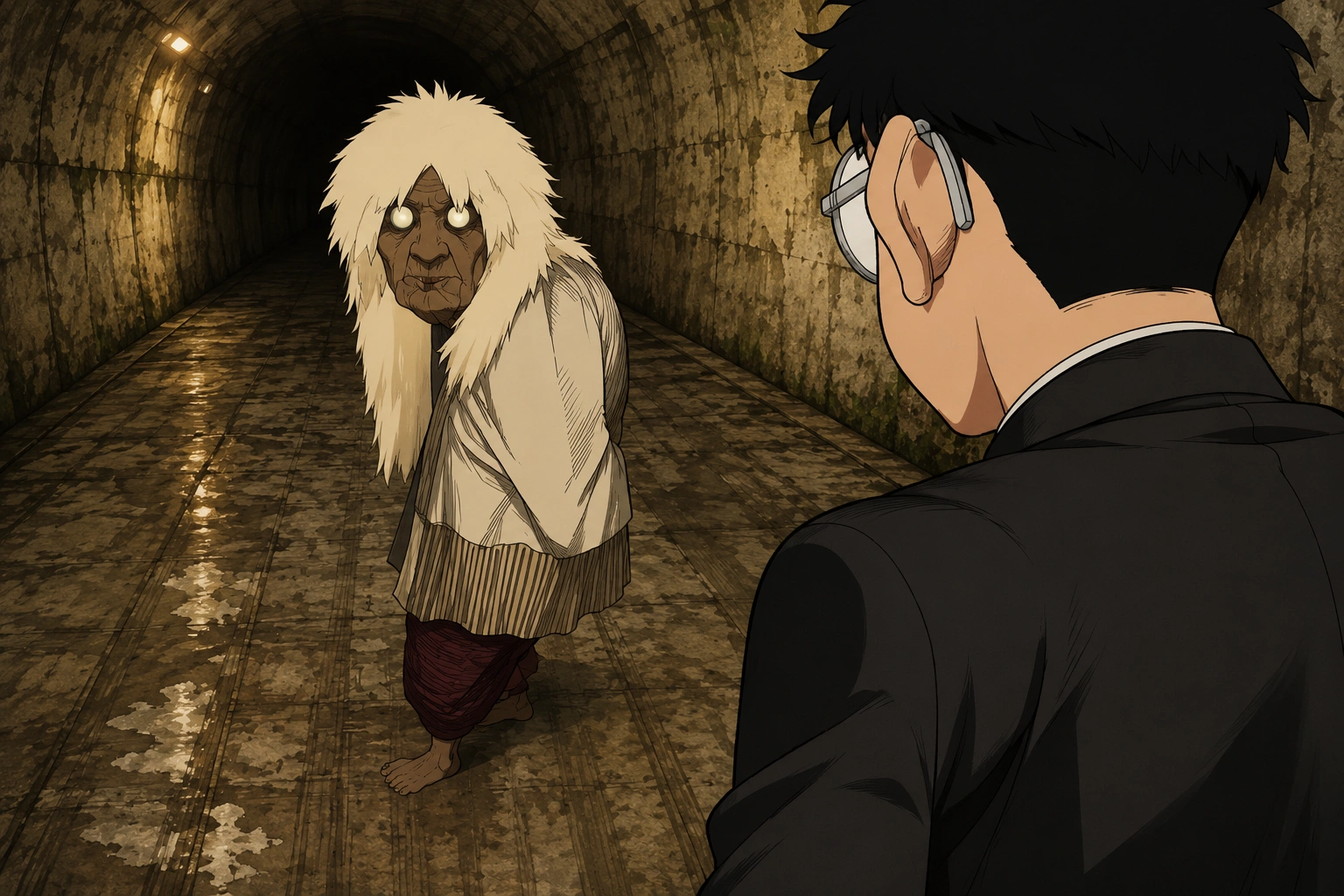
The series' foundational conflict and the fight that established all of its major territory rules. After Okarun is cursed, Seiko determines the Turbo Granny has merged with a powerful bound spirit in Shono City — making her effectively invincible within her territory. The protagonists initiate a high-stakes game of "tag" to lure her across city limits, with Okarun using the Granny's own borrowed speed while Momo provides psychokinetic support from his back. The turning point: exploiting the old legend that Turbo Granny maxes out at 100 km/h by crossing the city boundary on a train traveling at 120 km/h. Result: her consciousness is sealed inside a beckoning-cat figure, but the deal is struck — and a multi-arc obligation is born.
2. The Group vs. The Evil Eye — Chapters 38–42, 46–49
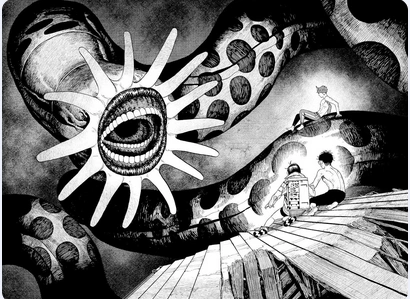
A desperate struggle of containment. The Evil Eye — a spirit born from 200 years of child sacrifice resentment — possesses Jiji because he is a "prodigy" with the physical and spiritual capacity to survive the possession without immediate cellular collapse. Okarun must physically suppress the possessed Jiji while Seiko prepares a sealing ritual. The turning point: Seiko successfully traps the Evil Eye's consciousness within the anatomical model Taro, preventing the spirit from fully destroying Jiji's cells. Consequences: Jiji becomes a permanent "possessed user," the team inherits a "weekly duel" training system, and Okarun begins the long process of building the combat rhythm needed to manage the spirit's bloodlust.
3. Great Kinta vs. Vamola (Sumerian Kaiju) — Chapters 69–70, 238–246
The series' transition from urban horror to large-scale science fiction. A massive space monster destroys an apartment block while searching for Earth's strongest warrior. Kinta realizes Nanoskin responds to brainwaves and transforms Momo's house into a giant Buddha-style robot to intercept it, manifesting the "Hyper Demigod Slash" and using Tokyo Tower as a mystic sword. The pilot inside the Kaiju suit is revealed to be Vamola — a Sumerian refugee, not an invader. This fight introduced mecha-scale combat, the full capabilities of Nanoskin visualization, and permanently shifted the group's understanding of what "alien" means.
4. Momo & Zuma vs. The Diorama Army — Chapters 138–147
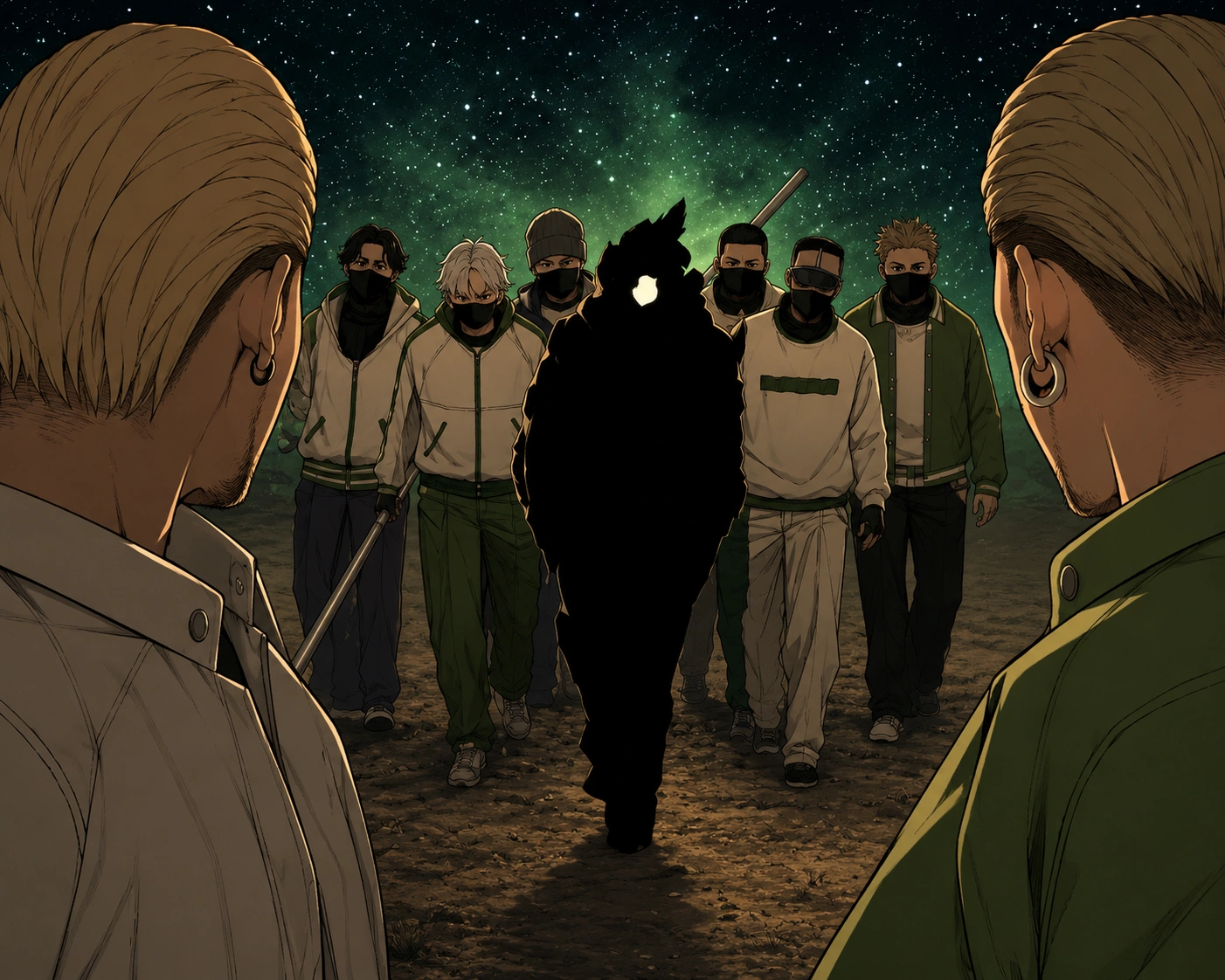
After being sucked into a "Deadly Magic Object," Momo and delinquent leader Unji Zuma must lead a spectral army through stages governed by rigid board-game mechanics. The combat follows a Strategic Rock-Paper-Scissors hierarchy: Archers counter Mages, Mages counter Warriors, Warriors crush Knights. The critical turning point: Momo uses a "Spice-A-Rama" buff card to generate heat, melting the stone forms of boss Rock-Hard Costinus. Clearing the game releases the Fairy-Tale Card yokai — which becomes a key element in the Noble Families arc. This fight introduced Zuma to the main cast and explored psychokinesis under non-natural laws.
5. EDF vs. Alien Main Force — Chapters 113–116
The large-scale war arc that demonstrated the full power of Reiko Kashima and established that organized human spiritual forces can operate at planetary scale. This fight expanded the series' cast beyond the main club and confirmed that Dandadan's world has institutional defenses — not just a high school research club.
6. Okarun vs. Lord Red — Chapters 223–225, 234–236
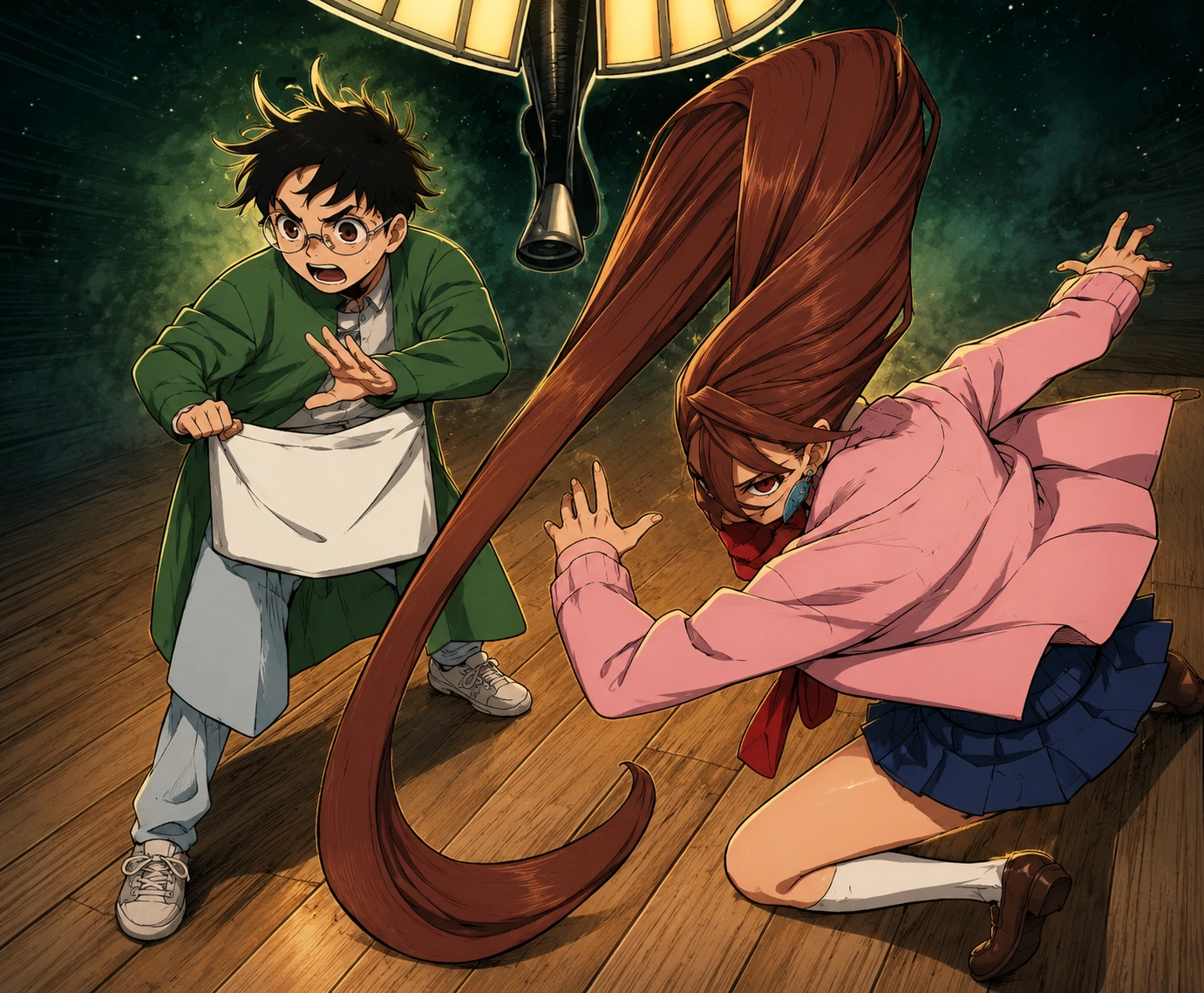
The most significant fight of the current arc. Okarun — now a normal human without Turbo Granny's speed — faces Lord Red at a Showa-era theme park. The Dragon Knight uses spatial-cutting attacks from the "Black Barber" scissors. Okarun responds with Ogre Club chi amplification and high-level martial arts, including a "Shoryuken"-style parry. The fight is Okarun's peak growth moment: confirming that his own mastery and resolve are sufficient without a curse. It also marks the formal elevation of stakes — the club is now a named target of a global supernatural conspiracy.
Battle Impact Summary
| Rank | Battle | Key Strategy | Primary Story Impact |
|---|---|---|---|
| 1 | vs. Turbo Granny | Train exploit at 120 km/h | Series foundation; partnership established |
| 2 | vs. Evil Eye | Seiko's sealing ritual | Jiji joins; weekly training system begins |
| 3 | vs. Lord Red | Ogre Club + martial arts parry | Okarun proves self-mastery; global stakes confirmed |
| 4 | vs. Sumerian Kaiju | Nanoskin / Tokyo Tower sword | Vamola joins; mecha combat introduced |
| 5 | EDF vs. Alien Main Force | Reiko Kashima's power | Planetary-scale defense established |
| 6 | vs. Diorama Army | Class-based troop rotation + heat card | Zuma joins; Fairy-Tale Card released |
Dandadan is constructed around escalating enigmas that bridge terrestrial folklore and intergalactic science. Initial questions about the nature of ghosts and aliens have given way to complex global conspiracies. Below is a full accounting of what remains unsolved, what has been answered, and what has recently shifted.
Ongoing and Unresolved Mysteries
The True Identity of Count Saint-Germain
Introduced under the alias Mr. Sanjome as a school faculty advisor, Count Saint-Germain presents as human but demonstrates technical knowledge of alien warp technology and ancient curses that suggests an origin well beyond modern humanity. He identifies as a "Collector of the Paranormal" and seeks to extract the intrinsic power of six specific folklore entities to create an "Ultimate Yokai." His true species, his actual age, and his specific interest in Okarun — whom he has labeled a "chosen one" — remain completely unknown.
The 13 Noble Families and the Nature of the Impending War
The world is covertly controlled by 13 Noble Families including the Delacroix dynasty, currently led by Sir Vlad. These ancient supernatural dynasties are systematically collecting yokai powers to prepare for an impending war. The central unresolved question: is this a civil war between the noble families themselves, or a coordinated defensive front against the 82 confirmed alien species observing Earth?
The Intrinsic Power of Six Folklore Curses
Saint-Germain has revealed a ritual requiring six specific folklore powers: Hansel and Gretel, Alice in Wonderland, Snow White, The Little Mermaid, Pinocchio, and Little Red Riding Hood. It is confirmed that Okarun currently carries the power associated with Pinocchio. The technical manifestation of this power, how it will function, and what the "Ultimate Yokai" created from all six will actually be remain open questions.
The Whereabouts of Momo's Parents
Momo was raised exclusively by her grandmother Seiko. Despite the series' emphasis on hereditary spiritual power — as seen with the Kito and Noble families — the identities and locations of Momo's biological parents have never been addressed. This is one of the series' most significant and deliberately withheld pieces of protagonist backstory.
Solved Mysteries and Pivotal Revelations
Why Full Alien Invasion Has Not Happened
Revelation: Earth has been protected from colonization for centuries by the existence of Yokai. Impact: This shifted the reader's understanding of spirits from random malevolent hauntings to Earth's "Indigenous Defense System." Aliens view Earth as a high-value life force resource, but the spiritual frequency of ghosts interferes with and neutralizes extraterrestrial technology — creating a stalemate that has lasted generations.
Vamola's Origin and Identity
Revelation: Initially suspected of being a ghost or spy, Vamola was revealed as a survivor of the Sumerian race. Her planet, Idea, was destroyed by an alien invasion. She came to Earth to find a "strong man" capable of protecting her species. Impact: Shifted the series' scope from urban legend to intergalactic political refugee narrative, and introduced the concept of alien factions who are themselves victims rather than aggressors.
The Secret of the Kito Family's Prosperity
Revelation: The Shimane village maintained 200 years of prosperity through human sacrifice to the Great Snake Lord. Impact: This transformed the Evil Eye from a random supernatural antagonist into a tragic figure — a spirit born from the accumulated resentment of sacrificial victims, representing 200 years of systemic generational trauma.
Recent Status Shifts
The Permanent Loss of Turbo Granny's Powers (Chapter 165)
Okarun fulfilled his deal with Turbo Granny and returned her spiritual power to her consciousness after recovering his jewels. He is now a baseline human relying on the Ogre Club. Whether this power loss is truly permanent, where Turbo Granny's consciousness relocated after leaving the beckoning-cat doll, and what power Okarun now carries without knowing it (hinted at by the Dragon Knights) are all active questions.
Momo's Pygmification and Amnesia
Following the Cursed Trunk incident, Momo was shrunken to Pygmy size — making her a "Socially Vulnerable" entity targeted by predatory fairy spirits. More critically, she has since suffered amnesia, losing her memories of her deep emotional connection with Okarun. Whether this is a side effect of the Magic Hammer (Uchide-no-Kozuchi) or a deliberate curse from a new antagonist is unconfirmed.
The Dragon Knights' Identification of Okarun
The Dragon Knights, an elite force of the Black Paladins, have identified Okarun as a "priority target" and called him a "liar" when he claimed to no longer possess supernatural power. This suggests they perceive a power within him — almost certainly the Pinocchio intrinsic power — that he himself is not yet aware of. The full implications of this designation have not yet been revealed.
Dandadan progresses through eleven escalating arcs, each expanding the world's scope — from localized yokai encounters to planetary invasions to global supernatural conspiracies. Every arc is canon; there are no filler arcs or non-essential storylines.
Arc 1 — The Wager and Turbo Granny Arc (Chapters 1–8)
The series begins with Momo and Okarun making a wager to prove each other wrong about the supernatural. Momo is abducted by Serpoians at an abandoned hospital; Okarun is cursed by the Turbo Granny in a haunted tunnel. After Okarun's transformation goes berserk, Momo's grandmother Seiko helps them lure Turbo Granny out of her territorial boundary through a high-speed chase, exploiting the legend that she cannot exceed 100 km/h by crossing the city limit on a 120 km/h train. The foundational arc: establishes the series' rules for territory, bound spirits, and the partnership that drives everything after it.
Arc 2 — Aira and the Acrobatic Silky Arc (Chapters 9–17)
Immediately following the Turbo Granny's defeat, Momo and Okarun search their school for the remaining missing jewels. Aira Shiratori — Momo's school rival — finds one of the gold balls, accidentally awakening her spiritual sensitivity. She mistakes Momo for a devil, drawing in the high-level yokai Acrobatic Silky, who has haunted Aira since childhood. After a fierce battle, Acrobatic Silky discovers her own tragic past and gifts her aura and power to Aira before passing on. The arc introduced the series' first major rival-to-ally conversion.
Arc 3 — The Serpo Reinforcements Arc (Chapters 18–25)
The Serpoians return with reinforcements: the Dover Demon and Nessie. They trap the group in an "empty space" — a psychokinetic isolation field — to harvest their reproductive data. The protagonists defeat the merged alien entities and force the Serpoians to withdraw and reconsider their approach. The arc confirmed that alien factions can and will escalate, and began the series' shift toward organizational threats rather than lone supernatural encounters.
Arc 4 — The Cursed House and Evil Eye Arc (Chapters 26–50)
Momo's childhood friend and first love, Jin "Jiji" Enjoji, arrives — immediately triggering jealousy in Okarun. The group travels to Shimane to investigate Jiji's cursed family home and discovers the Kito Family, a clan that has performed 200 years of human sacrifice to appease the Great Snake Lord. The accumulated resentment of these victims births the Evil Eye, which possesses Jiji — a "prodigy" whose body can survive the possession. Seiko seals the spirit's consciousness inside the anatomical model Taro to prevent it from consuming Jiji entirely. The arc introduced the series' most powerful recurring threat and added Jiji to the roster as a volatile "possessed user."
Arc 5 — School Life and Kaiju Arc (Chapters 51–76)
Back in Kamikoshi City, the group begins training to suppress the Evil Eye. A rumor about a specter in a local apartment block leads to an encounter with a massive Space Kaiju. Kinta Sakata, using alien Nanoskin technology and his hyperactive imagination, transforms Momo's house into a giant Buddha-style robot — manifesting the "Hyper Demigod Slash" and using Tokyo Tower as a mystic sword. The Kaiju pilot is revealed to be Vamola, a survivor of the Sumerian race whose planet was destroyed. The series' first mecha battle and its transition from street-level horror to large-scale science fiction.
Arc 6 — The Sumerian Invasion Arc (Chapters 77–120)
Vamola reveals the history of her homeworld Idea, destroyed by an intergalactic invader force called the Kur. The Kur's main fleet arrives at Tokyo Tower. The protagonists launch a coordinated planetary defense using alien combat simulators and spiritual training. The battle nearly overwhelms them until the high-level yokai Reiko Kashima intervenes — wiping out the alien fleet to protect her territory. The most significant confirmation that Earth has spiritual defenders operating far above the club's current level. The arc also established the Earth Defense Force as a broader institutional presence.
Arc 7 — The History and Culture Research Club Arc (Chapters 121–130)
In the aftermath of the invasion, the group formally establishes the History and Culture Research Club (Occult Club) at school as an official base of operations. Count Saint-Germain — disguised as faculty advisor "Mr. Sanjome" — infiltrates the club. The group deals with an Ombusman spirit attached to class representative Rin, dispelling it and beginning the deeper integration of school-life supernatural encounters with the ongoing Watchman Series mystery. The transitional arc that consolidated the "found family" structure and introduced the series' most significant long-game antagonist.
Arc 8 — The Cursed Wicker Trunk Arc (Chapters 131–163)
The search for a stolen jewel leads to a local police box and an encounter with delinquent leader Unji Zuma. Momo and Zuma are sucked into a "Deadly Magic Object" — a wicker trunk containing a self-contained pocket dimension that operates as a literal board game. They must lead a spectral army through stages governed by rigid game mechanics (Archers beat Mages, Mages beat Warriors, Warriors beat Knights), navigating time dilation and non-natural laws. Critical turning point: Momo uses a "Spice-A-Rama" buff card to generate heat, melting the boss. Clearing the game releases the Fairy-Tale Card yokai — which becomes a key piece in the Noble Families arc. Zuma joins the main cast.
Arc 9 — The Pygmy and Fairy Arc (Chapters 164–181)
Following the trunk escape, Momo is shrunken to Pygmy size by the Magic Hammer (Uchide-no-Kozuchi) — making her a "Socially Vulnerable" entity visible to and targeted by predatory Fairy spirits. Simultaneously, Okarun fulfills the terms of his original deal with Turbo Granny and permanently returns her spiritual powers to her consciousness after recovering his jewels. He is now a baseline human. He begins training to fight using his own Chi and the Ogre Club provided by Seiko. The major status quo shift that defines the current era of the series: both protagonists are diminished and must grow into something genuinely their own.
Arc 10 — The Shimane Rescue and Typhoon Human Arc (Chapters 182–205)
The group travels back to Shimane to find a permanent cure for Momo's shrunken state. Their plane is hijacked mid-flight by the resurgent Kito Family and targeted by a living atmospheric cryptid — a Typhoon Human. The group uses thermodynamic strategies and Chi rotation to dissipate the storm from the inside. The Magic Hammer is retrieved, but at critical cost: Momo suffers a form of amnesia, losing her memories of Okarun and her deep emotional connection to him. He continues to protect her as a stranger.
Arc 11 — The Black Paladins and Dragon Knights Arc (Chapters 206–Ongoing)
The series' current arc introduces the 13 Noble Families (Black Paladins) and their plan to create the "Ultimate Yokai" by extracting six pieces of intrinsic folklore power. Sir Vlad and his elite Dragon Knights — led by Lord Red (The Red Baron) — target Okarun, believing he still carries intrinsic power associated with the folklore of Pinocchio. When he denies this, they call him a liar — hinting at a power he is not yet aware of. A major battle unfolds at a Showa-era theme park. Okarun, now fighting purely on martial arts and Ogre Club Chi, delivers the arc's defining moment: proving that his own resolve, without any curse or supernatural boost, is sufficient to stand against elite supernatural combatants.
Momo Ayase and Okarun — The Central Relationship
Momo and Okarun start as two people who disagree about everything and accidentally need each other. She has the spiritual training and combat ability; he has the occult knowledge and the curse. Neither of them planned for what came after. The series is honest about how slowly that turns into something real — it does not rush the confession, it does not hand them an easy moment. It earns it through everything they go through together.
Momo's Side — The Jiji Problem
Momo carries feelings for Jiji (Jin Enjoji) into the series — her childhood friend, her first love. When he shows up during the Evil Eye arc, it forces her to work out whether what she feels for him is real love or just the pull of familiarity. The arc does not give her an easy answer. By the end of it the emotional weight has clearly shifted toward Okarun, but the series lets her figure that out through action rather than telling the reader what to think.
Okarun's Side — Earning His Own Power
Okarun starts the series with borrowed power — the Turbo Granny's curse gives him speed and strength he did not work for. The series makes clear that this is a problem: real growth means being able to fight without it. When he returns the Granny's powers in Chapter 165 and chooses to be a regular human in a world full of supernatural threats, that is the most important decision he makes in the entire series. He could have kept the power. He gave it back because he made a promise.
The Amnesia Arc — One Person Carrying Everything
After the Shimane rescue, Momo loses her memories of Okarun. Their entire history together is gone from her side. He knows who she is to him. She sees a stranger. He keeps protecting her anyway, without pressuring her to remember, without explaining himself in a way that would just sound strange. It is one of the more painful ongoing threads in the current arc — and also, because this is Dandadan, frequently funny.
Momo and Seiko — Grandmother and Heir
Raised by the Best
Seiko raised Momo alone and trained her as a spirit medium. She is both the group's most experienced fighter and its primary source of spiritual tools and knowledge. Her relationship with Momo is warm and occasionally exasperated — she trusts her granddaughter completely while still being the person who knows when Momo is about to do something reckless. She does not sit on the sidelines. She is usually better at this than anyone else in the room.
Okarun and the Turbo Granny — A Deal Made Whole
The Most Unlikely Partnership
Turbo Granny starts as a villain, ends up sealed in a beckoning-cat figure on Okarun's shelf, and somewhere in between becomes something like a grumpy mentor. She lent him her power under contract: return the jewels, get the power back. The dynamic shifts across the series from tool to something harder to name — she gives him advice, commentary, and the specific warmth of someone who has watched him grow and refuses to admit they care. When he returns her power in Chapter 165 he is keeping a promise made before he knew what it would cost him.
The Found Family — History and Culture Research Club
Jiji — The Rival Who Stayed
Jiji came in as a threat to Okarun and Momo's relationship. He is now possessed by the Evil Eye, training with Okarun weekly as a condition of surviving the possession, and one of the group's most committed members. His feelings for Momo are real and he knows she chose someone else. He respects it and stays anyway. That is a harder thing to do than most characters in this genre are asked to do.
Aira — The Rival Who Found Herself
Aira started as Momo's school rival — lonely, haunted since childhood by the Acrobatic Silky. After that spirit finally passed on, Aira inherited its power and found her own footing. She has feelings for Okarun, knows they are unlikely to go anywhere, and pursues them anyway because that is how she operates. She is the most straightforwardly honest member of the group about what she wants.
Kinta and Vamola — Unlikely but Real
Kinta is an alien technology nerd who fights entirely on imagination and enthusiasm. Vamola came to Earth specifically looking for the strongest man alive to protect her species. The gap between what she was looking for and what she found is enormous. She stayed anyway. Their dynamic carries the series' intergalactic refugee storyline and most of its consistent comedy.
Unji Zuma — The One Who Just Never Left
Zuma was a local delinquent leader who Momo stumbled into. After surviving the Cursed Trunk together he joined the group without much ceremony — the fights were interesting, and Momo's approach to loyalty matched his own. He is the group's most direct protector and the member least likely to overthink anything.
1. What is Dandadan about?
Dandadan follows two high school outcasts — Momo Ayase, who believes in spirits but not aliens, and Ken "Okarun" Takakura, who believes in aliens but not spirits. Their bet to prove each other wrong results in Momo being abducted by aliens and Okarun being cursed by a yokai. The story follows their partnership as they defend Earth from supernatural and extraterrestrial threats while recovering Okarun's stolen "family jewels" — anatomical repositories of massive spiritual life force coveted by both ghosts and alien invaders.
2. What is Okarun's current power status?
As of Chapter 165, Okarun permanently returned the Turbo Granny's spiritual power to her consciousness after recovering his jewels — fulfilling the terms of their original deal. He no longer possesses the ability to undergo demonic transformation or use supernatural speed. He now fights as a normal human, channeling his own internal Chi through a spiritual tool called the Ogre Club. However, the Dragon Knights believe he still possesses power he is unaware of — almost certainly the "Pinocchio intrinsic power" from Count Saint-Germain's six-folklore ritual.
3. Why is Momo tiny?
Following an encounter with the Magic Hammer (Uchide-no-Kozuchi) during the Shimane arc, Momo was shrunken to "Pygmy" size. This makes her a "Socially Vulnerable" entity, visible to and targeted by predatory fairy spirits — spirits of people who were forgotten by society. She also has two grains of rice for a full meal at this size. A permanent cure is being sought.
4. What is Momo's current emotional state?
In addition to her reduced size, Momo recently suffered amnesia — specifically losing her memories of her deep romantic connection with Okarun. From her current perspective, he is functionally a stranger. Okarun continues to protect her and the city while being seen as a "liar" in her eyes, as she has no memory of why she would trust him. Whether this is a side effect of the Magic Hammer or a deliberate curse has not been confirmed.
5. How does combat work in Dandadan?
Combat is governed by two technical systems. The Piano Beat Theory measures combat speed by how many "notes" (actions) an entity can fit into a single musical beat — elite fighters like the Evil Eye achieve four to five actions per beat. Spintronics posits that all energy is governed by rotation: left-rotating waves unleash force against physical enemies, while right-rotating waves contain ethereal spirits. High-level fighters also channel Chi — internal life force — by gathering energy below the navel and projecting it through training and visualization.
6. Who are the Black Paladins?
The Black Paladins are the elite exorcist-mercenary force serving the 13 Noble Families — ancient supernatural dynasties distributed worldwide. Their goal is to collect yokai powers for an impending global war. They gain corporate power by acting as "diviners" for large companies, using paranormal curses to crush business rivals. Their elite combat unit, the Dragon Knights, includes Lord Red (The Red Baron), Jack Wisp, Vakappa, and Shinobi.
7. Who is Count Saint-Germain and what does he want?
Count Saint-Germain is a high-level paranormal entity who has infiltrated the protagonists' school as faculty advisor "Mr. Sanjome." He is a "Collector of the Paranormal" who seeks to own every enchanted object, UFO, and yokai power in existence. He is currently manipulating both the protagonists and the Noble Families to extract the intrinsic power of six specific folklore entities and create an "Ultimate Yokai." His true species, origin, and actual age are unknown — one of the series' most active mysteries.
8. How does Nanoskin technology work?
Nanoskin is an ultrahigh-density nano-machine alloy of alien origin that responds to human brainwaves. It takes the shape of whatever the user visualizes with sufficient mental clarity — from complex machinery to giant robots to cellular-level wound repair. Using it puts an immense mental load on the user; if their concentration wavers, the construct collapses. It can also be hijacked by those with superior technological knowledge.
9. Why hasn't Earth been invaded by aliens?
Earth has been protected from full-scale colonization for centuries by the existence of Yokai. The spiritual frequency of ghosts and demons interferes with and neutralizes alien technology, creating a stalemate. This makes Earth's indigenous spirits its "defense system" rather than simply a source of supernatural hazards. Alien factions increasingly attempt to steal or replicate yokai abilities specifically to bypass this barrier — which is one of the reasons Okarun's stolen jewels (and the power they represent) are so highly coveted.
10. Is Dandadan appropriate for younger readers?
Dandadan contains graphic violence, horror imagery, crude humor (including its central anatomical premise), and mature romantic themes. It is serialized in Shonen Jump+ with a teenage-and-above target audience. The anime adaptation (Science SARU, 2024) carries a corresponding rating. Younger readers should exercise discretion, and parents should review content before allowing access.
- The Chainsaw Man Connection: Before debuting Dandadan, Yukinobu Tatsu served as a professional assistant to Tatsuki Fujimoto, the creator of Chainsaw Man and Fire Punch. This makes Tatsu one of the highest-profile "second-generation" creators in modern shonen manga.
- Defining Occultism: Tatsu defines occultism as "intellectual entertainment" — the act of thoroughly investigating the unexplained rather than blindly believing in it. This philosophy is the structural foundation of Dandadan's entire power system and lore design.
- Real-World Political Lore: The manga incorporates Paul Hellyer — the real-life former Canadian Defense Minister who became a notable UFO advocate — as the source for its "82 confirmed alien species" statistic. Dandadan cites him directly within its in-universe documentation.
- Folklore Roots of Turbo Granny: The series acknowledges the theory that the Turbo Granny legend is rooted in the Obasute myth — the practice of abandoning elderly women in mountains during famines. The yokai is explicitly connected to this tradition of societal abandonment, consistent with the series' theme of social marginalization as spiritual origin.
- The Batting Cage Cure: Tatsu started going to batting cages to combat depression and insufficient sunlight during his serialization schedule. He later expressed a wish to try Shohei Ohtani's famous "hat-tossing thing" in an author note.
- The Data Erasure Incident: Tatsu once accidentally overwrote the final digital data for an entire completed chapter — described as a "truly frightening" experience in an author note.
- Rhinoceros Beetle Parenting: Tatsu spent a full year raising rhinoceros beetle larvae and experienced what he described as "trembling fear" when they began hatching and wandering around his workspace.
- Alien Corporate Culture: The Serpoian combat unit Ta Kowasa has an official "favorite saying" on its technical stat chart: "Leave work on time." The sniper unit Suda Ko's motto is: "One good deed per day."
- The Magic Hammer Mythology: The Magic Hammer (Uchide-no-Kozuchi) is explicitly linked to the Japanese folktale of Issun-boshi — the Inch-High Samurai who used the tool to grow to normal size after defeating a demon. The same hammer is what shrank Momo to Pygmy size.
- The "Mummy" Etymology: The series notes that the word "Mummy" derives from the Latin Mumia, originally referring to the substance used in the mummification process — incorporated as genuine in-universe lore for the alien survival-suit technology.
- Bootube: The series features "Bootube" — a thinly veiled parody of YouTube — which characters use to research urban legends. One priest in the series uses it to perform headstands for views.
- Three-Second Memory Limit: The turtle-headed brain of the diorama pixie Mai Kawabanga has a functional memory of exactly three seconds. She also considers herself a professional "self-proclaimed producer" attempting to launch Rin's idol career.
- Pygmy Dietetics: After being shrunken, Momo's biological requirements changed so drastically that she becomes "completely full" after eating two grains of rice.
- Anatomical Model Romance: Taro — the anatomical model yokai that serves as the Evil Eye's sealed vessel — is in an established romantic relationship with another model spirit named Hana.
- Snack Bag Engineering: The manga explains that the metallic interior of snack bags prevents light from hitting the oil in the food, which would otherwise produce toxic fatty acid peroxide. Standard Dandadan casual lore delivery.
- Seiko's Secret Ingredient: In a running culinary gag, Seiko reveals that her takoyaki always contains konnyaku — a gelatinous ingredient not typically found in standard versions of the dish.
- Physical Toll of Serialization: In a Volume 16 author note, Tatsu reported on his physical condition with characteristic directness: "My back hurts!"
 Yukinobu Tatsu
Original Creator
Yukinobu Tatsu
Original Creator
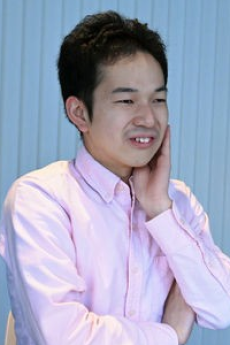 Fuuga Yamashiro
Director
Fuuga Yamashiro
Director
 Hiroshi Seko
Series Composition
Hiroshi Seko
Series Composition
 Naoyuki Onda
Character Design
Naoyuki Onda
Character Design