Gachiakuta
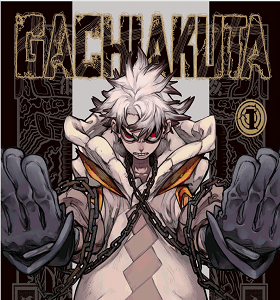
Gachiakuta (Japanese: ガチアクタ; officially subtitled Souls of the Discarded) is a dark fantasy battle manga written and illustrated by Kei Urana, with graffiti design contributions by Hideyoshi Andou. It is serialized in Weekly Shōnen Magazine published by Kodansha and is currently ongoing.
The story centres on Rudo Surebrec, a "Tribesfolk" boy who grows up in the slums on the outer edge of a floating city called the Sphere. Rudo lives as a scavenger and petty thief, treated as sub-human by the elite Spherites around him, but he is fiercely devoted to his foster father, Regto, and to the objects he collects — believing that anything cared for with sincerity has a soul worth protecting. When Regto is murdered and Rudo is framed for the crime, he is sentenced to the Drop — an execution carried out by hurling criminals off the edge of the Sphere into the abyss below.
He survives. The abyss is not empty.
Below the Sphere lies the Ground, a vast, toxic wasteland built entirely from centuries of the Sphere's discarded garbage, and inhabited by a society of survivors called Groundlings. Rescued from a predatory Trash Beast by a man named Enjin, Rudo joins an elite organisation called the Cleaners and begins to master his extraordinary — and deeply personal — supernatural ability. The series follows his fight to uncover the truth behind Regto's murder, understand the legacy of his own bloodline, and eventually confront the corrupt system that created the world's divide.
Kei Urana has cited a formative childhood memory as the emotional origin of the series: breaking a beloved pen and feeling, viscerally, as though the object was "pleading" with them. That sensation — that everything cared for accumulates a kind of soul — became the philosophical foundation of Gachiakuta's entire power system, aesthetic, and thematic identity.
The series distinguishes itself from standard battle shonen through its "urban-punk" visual language, with heavy influence from graffiti culture and street art woven into the character and environment design. Its power system is rooted not in bloodlines or chakra but in the emotional history between a person and the objects they cherish — making every fight a deeply personal expression of who a character is and what they have lost.
The world of Gachiakuta is built around a single, devastating vertical axis: the wealthy live above, and everyone else lives beneath them — beneath their waste, beneath their contempt, and beneath the literal rain of garbage they produce every day.
The Sphere
The Sphere is a large, high-altitude city that floats above the surface of the Earth and is always in motion, drifting slowly through the sky. Its residents live in comfort and maintain their environment's pristine condition through a simple mechanism: everything undesirable — garbage, convicted criminals, and social outcasts — is thrown overboard. Spherites are governed by an extreme binary legal system that categorises all behaviour as either "pure" or "filth." Any serious crime results in an immediate death sentence via the Drop, with no trial or appeal.
Sphere society maintains control through deliberate ignorance. Residents are told the Pit below is nothing but darkness and death. The existence of a thriving Groundling civilisation is actively suppressed. "Tribesfolk" — the Sphere's internal underclass, living in overcrowded slum margins — serve as a social deterrent, a visible warning to citizens: behave, or you end up like them. And after that, worse.
The Ground (The Pit)
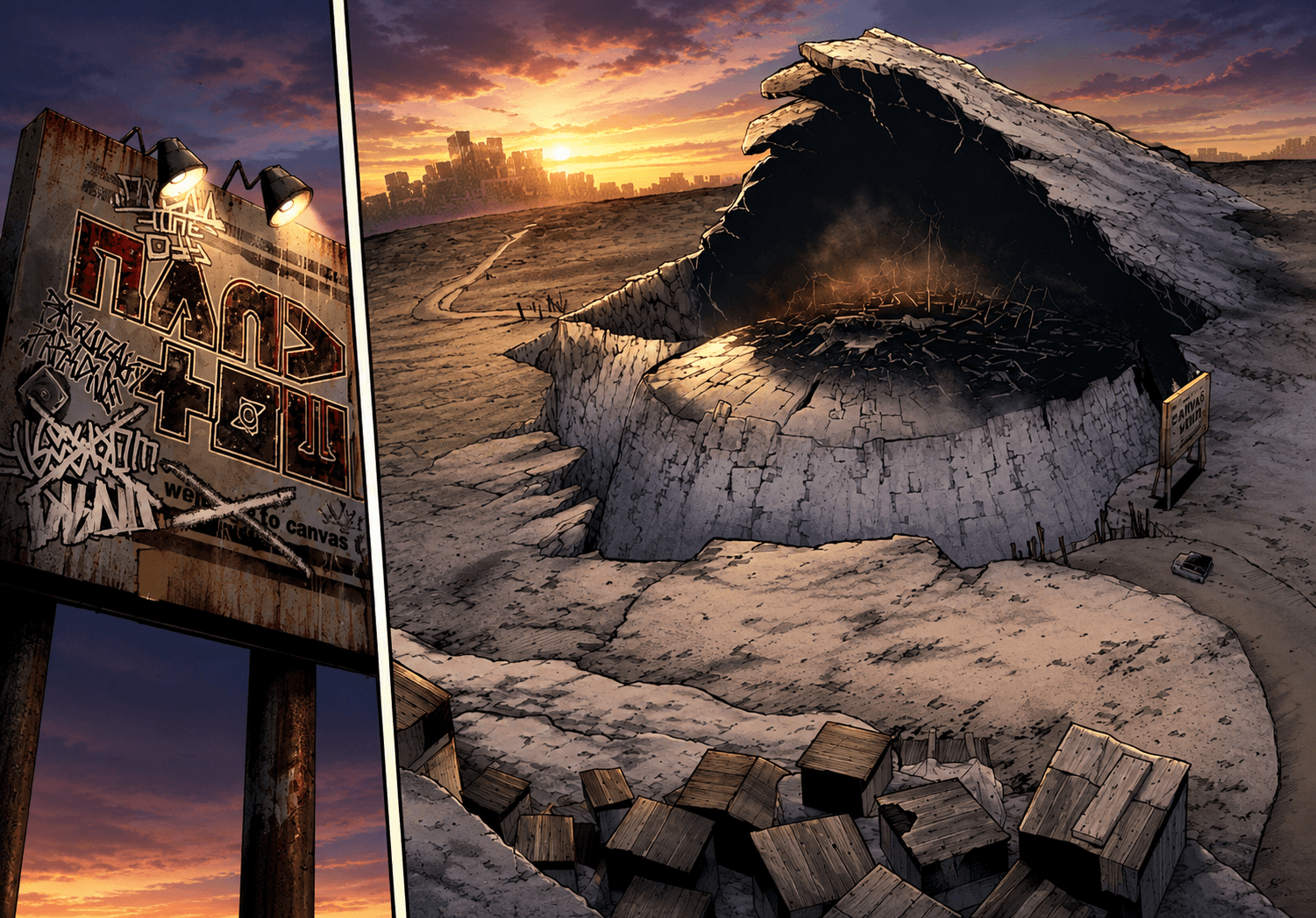
What the Sphere calls "the Pit" is called the Ground or "Aboveground" by those who actually live there. It is an expansive surface world buried under centuries of accumulated waste — a polluted, chaotic, and extraordinarily dangerous environment that has nonetheless given rise to its own complex cultures, economies, and power structures.
The air on the Ground is toxic. Without a specialised gas mask, a standard human being will die within approximately 15 minutes of exposure. The surface is divided into Safe Zones (habitable, relatively stable areas), Polluted Zones (overrun by Trash Beasts and lethal to the unprepared), and No Man's Lands (the most extreme environments, including areas like the desert of Penta where even the air is filled with pulverised garbage particles).
Groundling cities are built to survive the constant "rain of trash" falling from the Sphere above. Canvas Town, one of the most prominent settlements and known as the "City of Graffiti," is constructed inside a large impact crater and sheltered beneath a protective dome. Architecture across the Ground repurposes the Sphere's discarded materials into homes, markets, and art — waste becoming the foundation of an entire civilisation.
Critically, the Ground is also biologically distinct. It is "teeming" with residual energy from entities known as Ancient Rulers, which has altered the local environment over centuries — mutating fauna into powerful creatures like Ground Horses, and giving rise to Givers: humans with the rare ability to manifest supernatural powers through objects.
Social Hierarchy & Discrimination
Social status in this world is determined almost entirely by altitude. Spherites consider themselves the apex of civilization and regard Groundlings as sub-human "filth." This is not merely cultural prejudice — it is institutionalised, enforced, and reproduced through language, law, and the physical act of discarding people from the sky.
On the Ground, Givers hold the most power and influence, with non-Giver Supporters occupying a subordinate but essential logistical role. The resentment flows upward: Groundlings loathe Spherites not only for the cultural dehumanisation but for the concrete, material destruction the Sphere causes — the toxic rain that poisons land, kills livestock, and births the monsters they must fight to survive.
Characters like Rudo are subjected to constant verbal dehumanisation throughout the series — called "filthy thief," "son of a murderer," and "rotting piece of garbage" — a pattern that makes his journey toward self-worth and the worth of others all the more charged.
Trash Society & the Culture of Salvage
Life on the Ground has developed an entire cultural economy around reclamation. Objects are not disposable — they are potential vessels for Anima, and an item's power is proportional to the love and care invested in it over time. This creates a society where the longest-kept, most-treasured objects are also the most powerful weapons. Some factions have taken this reverence to religious extremes, treating falling garbage as divine gifts from the sky and enforcing ritual obeisance around it.
Food production is severely limited by the toxic environment. Vianders — merchant Givers who use their abilities to cultivate and prepare high-quality food and desserts — are among the most commercially influential figures on the Ground. Sweets, in particular, are described as more sought-after and addictive than conventional drugs.
The supernatural framework of Gachiakuta is built around a single concept: Anima — the soul energy that accumulates inside an object when it is treated with genuine love and care over an extended period of time. This is not a metaphor in the world of the series. It is a measurable, deployable force, and the foundation of every combat ability shown in the manga.
Givers
Givers are rare human beings capable of perceiving and drawing out the Anima within objects to manifest supernatural abilities. While most Groundlings view this as a unique and admirable human potential, the information broker Mymo reveals a darker truth: Giver powers are not natural. They are a form of biological pollution caused by the residual energy of "Ancient Rulers" whose presence saturates the Ground. Givers are, in Mymo's framing, parasites drawing on an external power source to perform feats that defy natural law.
A Giver's power is not static or fixed at birth. Its quality improves proportionally with the time and care invested in an object, while its raw strength is determined by the depth of the user's personal ideology and the breadth of their lived experience. Two Givers wielding identical objects will produce entirely different results depending on who they are as people. Givers are broadly categorised by function: Attacker (offensive), Defender (protective), and Healer (supportive).
Vital Instruments (Jinki)
When a Giver's treasured object accumulates enough Anima through prolonged, sincere care, it becomes a Vital Instrument, also called a Jinki. A Jinki is not simply a weapon — it is a physical expression of its user's psychology, history, and soul. The abilities it manifests are deeply personal: Amo's boots produce scent-based illusions because her trauma made smell her most potent emotional anchor; Zanka's staff techniques reflect years of obsessive physical discipline; Riyo's scissors, wielded with her feet, reflect her background as a former contract killer — precise, efficient, ruthless.
A Jinki can evolve over time. As a Giver deepens their self-understanding, the Vital Instrument can change shape, reveal new techniques, or grow in raw power. If destroyed, the power typically disperses entirely — though Watchman Series users can sometimes bypass this by drawing energy from their Single Desire directly.
Value Manifestation — Rudo's Unique Ability
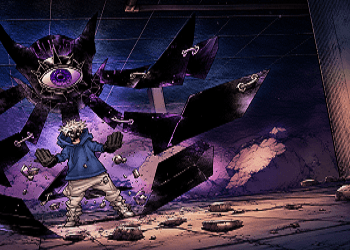
Rudo's ability stands apart from every other Giver in the series. Rather than drawing power from a single long-cherished object, Value Manifestation allows him to imbue Anima into any object he touches — including random pieces of garbage — and temporarily draw out its maximum potential as a weapon. Each improvised weapon burns bright and fast before the Anima dissipates. He can split his gloves' power across up to three separate objects simultaneously. At high states of resonance, his body physically adapts to the power output — developing "wings" and enhanced speed during his battle with Mymo.
The Watchman Series
The Watchman Series consists of six ancient items once worn simultaneously by a single, as-yet-unidentified human being. They contain what is described as a "vast, unlimited supply of energy" that dwarfs any standard Jinki. All six bear the distinctive nOR logo — believed to stand for "Normal," an ironic designation suggesting they were once commonplace equipment for a far more advanced, lost civilisation.
| Item | Current Holder | Ability |
|---|---|---|
| Work Gloves | Rudo Surebrec | Value Manifestation — draws out maximum worth of any object touched |
| Boots | Amo Empool | Scent Manifestation — recreates sensory memories via smell to trap targets in illusions |
| Coat | Zodyl Typhon | Full capabilities unrevealed; held by the Raiders' leader |
| Time Walk (broken clock) | Enjin (hidden) | Concealed inside his umbrella Jinki; described as carrying an "enormous price" |
| Unknown ×2 | Unidentified | Two pieces remain unaccounted for |
Mental Pollution & the Single Desire
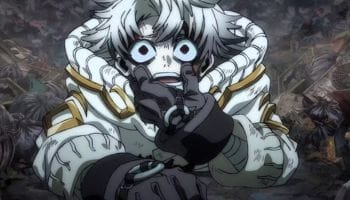
The immeasurable Anima within a Watchman item actively floods the mind of anyone who wields it without the correct psychological foundation — an effect called Mental Pollution that drives ordinary people insane. The only defence is a Single Desire: a sole, all-consuming obsession born from a grave loss that hollowed out the user's psychology. This obsession fills that void, anchoring the user against the item's overwhelming power. The series is careful to frame this as a psychological qualification, not a moral one — the Watchman Series does not reward righteousness, it rewards singular, undivided focus born from irrevocable loss.
Trash Beasts
Trash Beasts form when discarded objects accumulate sufficient negative human emotion — indifference, hatred, despair — until the mass of waste gains malevolent life. They range from creature-sized to colossal and make large sections of the Ground uninhabitable. In the most literal sense, they are the physical consequence of the Sphere's culture of disposal: monsters made from the act of throwing things away without care.
Gachiakuta operates on multiple layers of long-running mystery, with major reveals consistently recontextualising earlier events. The following are the series' core unresolved and partially-resolved threads as of the current arc.
Who Killed Regto?
During the battle at Doll Fest, Mymo reveals the person who actually murdered Rudo's foster father Regto is a current, active member of the Cleaners — meaning the organisation Rudo joined for protection may be harbouring his greatest enemy, and someone within it has had a vested interest in Rudo's fate from the very beginning.
Rudo's Biological Father: Alto Surebrec
Rudo's biological father is Alto Surebrec — a man from the Sphere branded a "ruthless killer" and sentenced to the Drop. Mymo implies Alto's history is substantially more complex than the official charge, and that his story intersects with the deeper history of the Surebrec name in ways not yet fully disclosed.
Rudo's Mother
Rudo's mother's identity remains entirely unrevealed. Mymo knows who she is and deploys this knowledge as a psychological weapon mid-battle — suggesting her identity carries significant weight in the context of the larger conspiracy surrounding Rudo's origins.
The Surebrec Bloodline & Canis Surebrec
Rudo is a descendant of Canis Surebrec, known as "The Undertaker," believed to be the original owner of the entire Watchman Series. Historical murals suggest Canis could move freely between the Sphere and the Ground — a crossing the Border now makes lethal. "Surebrec" is also an exact anagram of Cerberus, tying the bloodline symbolically to the underworld from which Rudo rose.
The Original Rudo Surebrec & Enjin's True Age
Centuries ago, a young Enjin encountered a branded slave boy who called himself Rudo Surebrec — making the current Rudo a descendant, not the first. This original Rudo gave Enjin his name (meaning "person who connects others") and entrusted him with a broken clock: the Watchman piece Time Walk, hidden in Enjin's umbrella ever since.
The Border & the Angel
The Border kills anyone who tries to cross between the Sphere and the Ground. Amo survived Penta because she witnessed a multi-winged being crossing freely between sky and earth — defying the Border's lethality entirely. Whether this being connects to the Watchman Series owner, the Ancient Rulers, or something else remains one of the series' most open questions.
The Erased History of the World
Boss Arkha Corvus reveals the Cleaners' true purpose is to investigate the world's division. All Ground records older than 150 years have been "faded" — specifically in sections explaining the Sphere–Ground relationship — pointing toward a deliberate, global-scale erasure of history designed to keep both societies permanently separated.
The Source of Giver Powers
Giver abilities are not natural human evolution but biological contamination from "Ancient Rulers" whose energy saturates the Ground. The identity, origin, and fate of these Ancient Rulers — whose power underpins the entire combat system of the series — remains entirely unrevealed.
Class Discrimination & Systemic Exploitation
The physical architecture of the world makes its class critique literal: the elite do not merely benefit from a system that harms the poor, they actively throw their garbage onto them every day. Every arc traces a direct line between the Sphere's indifference and the violence Groundlings must absorb — the toxic air, the Trash Beasts, the destroyed habitats, the tribes wiped out by pollution. The discrimination is vertical, structural, and ongoing.
The Worth of the Discarded
Rudo's core ideology — that nothing is truly "trash" if someone cares for it — extends without exception to people. The same characters branded as sub-human filth by Sphere society are the ones who develop the deepest bonds and the most powerful Jinki. Value is not assigned by social rank. It is created through attention, care, and connection.
Environmental Consequence
Trash Beasts are the direct, material result of human carelessness — they form from discarded objects saturated with negative emotion. The "rain of trash" from the Sphere does not just inconvenience Groundlings — it turns habitable territory into Polluted Zones, destroys communities, and creates monsters. Gachiakuta frames environmental destruction as an ongoing, daily violence inflicted by those with the power to discard on those without the power to refuse it.
Obsession, Loss, and the Weight of a Single Desire
The only people who can wield god-level objects without losing their minds are those who have already lost something so fundamental it left a permanent hole in their psychology. Their obsession — revenge, love, power, protection — is a wound that has been repurposed. The series treats this with genuine ambivalence: the same singular drive that makes Rudo formidable is the same force that risks consuming him. Mymo, who wanted godhood above all else, is the cautionary extreme.
Hands: Warmth and Control
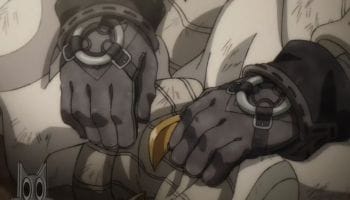
Cold hands represent predatory control — embodied by the trafficker "Mister," whose grip reduced Amo to an isolated captive. Warm hands represent genuine connection and the transference of Anima: Regto giving Rudo his gloves to protect his dignity; Rudo extending warmth to the traumatised Amo for the first time in her life. The gloves Rudo carries are not incidentally his Vital Instrument — they are the physical object most associated with another person reaching out to him with care.
Eyes as Essence
Eyes appear repeatedly as a motif for a person's true inner quality. This is literalised through Semiu Graea's Jinki — glasses that allow her to see directly into a person's soul. More broadly, the series uses eye imagery to represent the act of truly seeing someone and acknowledging their worth. In a world where Sphere residents are conditioned not to look at what lies below them, the act of looking — really looking — carries moral weight.
The Anagram Hidden in the Name
"Surebrec" is an exact anagram of Cerberus — the three-headed hound of the underworld, guardian of the boundary between the living and the dead. For a protagonist cast into what the Sphere calls the land of death, whose lineage is tied to "The Undertaker," and whose journey is fundamentally about the border between two worlds — the name is not an accident. It embeds the series' entire mythological subtext into the protagonist's identity from page one.
The Cleaners
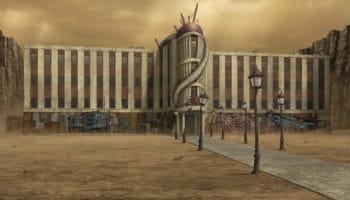
Publicly licensed as Trash Beast exterminators, the Cleaners' true purpose — established by Boss Arkha Corvus — is to investigate why the world was divided and uncover the erased history buried under the Ground's waste. The organisation has approximately 100 members across six teams:
- Team Akuta — Led by Enjin. Core combat team: Rudo, Zanka, Riyo, Eishia, Shikage.
- Team Front — Reports directly to Corvus. Includes Semiu Graea and Amo Empool.
- Team Danger — The organisation's strongest "lone wolves" — Givers whose powers or personalities make conventional teamwork a liability. Includes twins Otto and Epalte.
- Team Child — Supervised by Bro Santa; includes Dear Santa and Guita.
- Team Eager — Includes combatants Tamsy and Delmon.
- Team Beauty — One of the six core teams; full composition unrevealed.
Non-Giver Supporters like Gris Rubion and Tomme are full members, providing the logistical and physical backbone that makes Giver-led missions viable. The Cleaners are unique in treating Tribesfolk as fellow human beings worthy of protection.
The Raiders
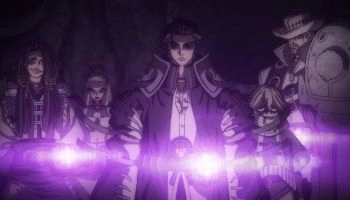
Every member of the Raiders is a Giver. Led by Zodyl Typhon (who wields a Watchman Series coat), their ultimate goal is to collect all six Watchman items, breach the Border, and destroy the Sphere. Originally a band of opportunistic thieves, they have evolved into a ruthless and experimental force — conducting human experimentation, engineering artificial Trash Beasts, and using calculated deception to eliminate Cleaner teams.
Key members: Jabber Wonga (sadistic front-liner; neurotoxin claws), Cthoni Andor (spatial warp user), Bundus Beggalcate (negotiator). Former member Fu Orostor defected to Rudo's side, representing a crack in the Raiders' ideological cohesion.
Sphere Authorities & Apostles
The Sphere's governing body enforces an extreme isolationist regime — any serious crime is punishable by immediate death via the Drop, with no gradation of sentencing. Residents are deliberately kept ignorant of Groundling society. The Sphere's elite enforcers, known as Apostles, serve as the sky-side equivalent of the Ground's Hell Guard.
The Hell Guard
The Ground's primary law enforcement body, specialising in controlling human threats rather than monsters. Most members have no Giver abilities, making their expertise in countering Giver-based threats a significant tactical achievement. They also investigate the broader Sphere–Ground conflict. Zanka Nijiku comes from a prominent Hell Guard family — a source of ongoing personal tension in his arc.
Information Brokers & Vianders
Mymo and Momoa Rukel are independent operators who trade in secrets dangerous enough to reshape entire factions. Mymo ultimately attempted to transcend humanity by destroying his own Jinki and drawing Watchman-level power directly — transforming into a monstrous divine form before escaping and remaining at large.
Vianders are merchant Givers who produce food and desserts — commodities of extraordinary value where conventional agriculture is nearly impossible. Sweets are described as more addictive than drugs on the Ground, giving Vianders commercial leverage no combat faction can easily replicate.
Gachiakuta's battles are never purely physical confrontations. Every major fight is an ideological collision — a test of what a character believes, what they have lost, and how far they are willing to go. The series uses combat to reveal character rather than simply escalate stakes, and each significant encounter leaves a permanent mark on the story's direction.
1. The Awakening — Rudo vs. Scavenger Trash Beast (Chapters 1–4)
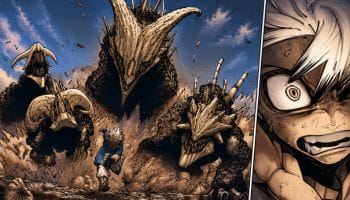
Immediately after being dropped from the Sphere, Rudo — disoriented, unarmed, and in a completely alien environment — is attacked by a predatory Trash Beast formed from centuries of accumulated human waste. Facing certain death with nothing but his inherited work gloves, Rudo's Giver potential flickers for the first time, though he cannot yet consciously access it. Enjin intervenes, destroying the Beast with a single strike of his umbrella Jinki in a display of overwhelming power that establishes the ceiling Rudo is working toward.
The fight's narrative function is foundational: it introduces the Ground's ecology, establishes the existential threat of Trash Beasts, demonstrates what a fully developed Vital Instrument looks like in action, and positions Enjin immediately as both mentor and mystery. Rudo's decision to join the Cleaners in the aftermath is not made from ambition — it is made because he has no other option. That desperation becomes the first layer of his character.
2. The First Raider Clash — Rudo & Zanka vs. Jabber Wonga (Chapters 17–21)
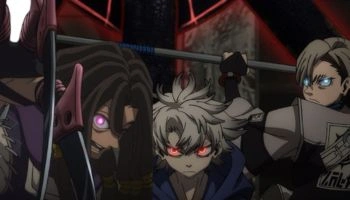
During a training mission, the Cleaners are ambushed by Raiders Jabber Wonga and Cthoni Andor, who have targeted Rudo specifically — believing a "Spherite" is a rare and exploitable commodity. This is the fight where Rudo first consciously uses Value Manifestation, imbuing a piece of discarded trash with enough Anima to create a functional weapon mid-combat. The moment is raw and unrefined, but it signals to Jabber — and to the reader — that Rudo's ability is something outside the normal Giver framework.
Zanka carries the bulk of the fight's technical weight, showcasing genuine combat competence while being severely tested by Jabber's sadistic fighting style and the paralysing neurotoxin delivered by his "Mankira" claws. The Raiders ultimately retreat, but the encounter establishes them as the series' primary human threat and marks the beginning of Jabber's fixation on Rudo and Zanka as targets worth returning to.
3. The Desert Illusion — Expedition Team vs. Amo Empool (Chapters 32–37)
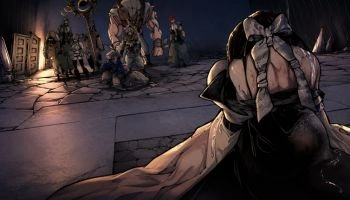
This is the series' first truly psychological battle. The Cleaners travel to the No Man's Land desert of Penta and are lured into Amo's "garden" under the guise of hospitality. Amo's Watchman Series boots release scents that directly trigger the memories of those who inhale them — not illusions in the conventional sense, but real sensory experiences pulled from each target's own past and weaponised against them. Delmon, the team's largest physical combatant, is turned against his own allies while trapped in a hallucinatory state.
The fight reveals the first Watchman Series item seen in active use since Rudo's gloves, and introduces Amo as a figure of tragic depth — a person so profoundly isolated by abuse that her obsession with "having guests" became the singular desire anchoring her to sanity while wielding a god-level object. Her eventual recruitment into the Cleaners reframes this entire encounter as the beginning of her redemption arc.
4. The Pride of the Average Joe — Zanka vs. Jabber Wonga Rematch (Chapters 50–58)
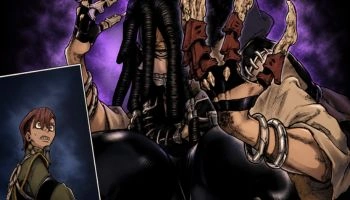
A direct test of Zanka's growth, built entirely around the series' central ideological tension between natural talent and disciplined effort. Jabber is a natural — fast, instinctive, unpredictable. Zanka is the "Average Joe" who has reached his level through what he calls "boring" but flawless discipline.
Jabber's sadism and speed push Zanka to his absolute limit — broken ribs, toxic exposure, sustained physical punishment. Zanka does not win cleanly. He wins by outlasting Jabber's assumption that talent is enough, landing a decisive, technically perfect blow that reflects everything his training represents. It is one of the series' most thematically satisfying fights because it validates the ideology without making it easy — Zanka earns the win at considerable cost, and the series respects that cost.
5. The Divine Transcendence — Rudo & Enjin vs. Transformed Mymo (Chapters 156–163)
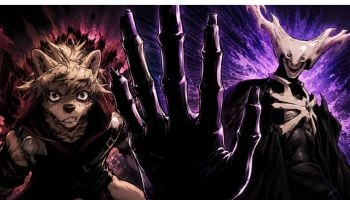
The battle at Doll Fest is the series' largest and most consequential fight to date. Mymo destroys his own Jinki to draw power directly from a Watchman Series piece, bypassing the normal Giver framework entirely — transforming into a multi-winged biological horror of divine proportions. Rudo enters a state of intense resonance, his body physically adapting to match Mymo's divine speed, growing "wings" and undergoing visible biological changes. The fight is city-leveling in scale, decimating the South Ward.
Mymo fights with equal parts physical force and psychological warfare — deploying his knowledge of Regto's true killer as a weapon against Rudo mid-battle to shatter his focus. It partially works. The fight ends not with a decisive victory but with Mymo taking the Countess hostage and retreating — alive, at large, and in possession of Watchman-level power. Its aftermath reshapes the series entirely: the concept of Single Desire is formally introduced, the South Ward is destroyed, and Rudo now has deeply personal reasons — beyond revenge for Regto — to find Mymo again.
Season 1 Arc Overview
Season 1 aired weekly every Sunday from July 6 to December 21, 2025, produced by Bones Film and directed by Fumihiko Suganuma. The season is split into two cours with separate opening themes.
| Arc | Episodes | Manga Chapters | Key Focus |
|---|---|---|---|
| 1. The Descent & Cleaner Initiation | Eps 1 – 5 | Ch. 1 – 13 | World building, the Drop, Rudo joins the Cleaners |
| 2. The First Raider Clash | Eps 6 – 10 | Ch. 14 – 31 | Raider ambush, Jabber & Cthoni fights, Value Manifestation |
| 3. The Penta Arc | Eps 11 – 13 | Ch. 32 – 43 | Amo Empool, Watchman Series reveal, scent illusions |
| 4. Raider War & Border Experiment | Eps 14 – 24 | Ch. 44 – 87 | Zodyl Typhon, Watchman pieces, colossal Trash Beast |
All 24 Episodes — Titles, Dates & Chapters
| # | Title | Air Date | Chapters | Arc |
|---|---|---|---|---|
| Arc 1 — The Descent & Cleaner Initiation · Cour 1 Opening: "HUGs" by Paledusk · Ending: "Tomoshibi" | ||||
| 01 | The Sphere | Jul 6, 2025 | Ch. 1 | Arc 1 |
| 02 | The Inhabited | Jul 13, 2025 | Ch. 2 – 3 | Arc 1 |
| 03 | The Ground | Jul 20, 2025 | Ch. 4 – 6 | Arc 1 |
| 04 | Cleaner HQ | Jul 27, 2025 | Ch. 7 – 10 | Arc 1 |
| 05 | Raiders | Aug 3, 2025 | Ch. 11 – 13 | Arc 1 |
| Arc 2 — The First Raider Clash | ||||
| 06 | One Good Strike!! | Aug 10, 2025 | Ch. 14 – 17 | Arc 2 |
| 07 | A Score to Settle | Aug 17, 2025 | Ch. 18 – 21 | Arc 2 |
| 08 | Moving Forward | Aug 24, 2025 | Ch. 22 – 24 | Arc 2 |
| 09 | The City of Graffiti | Aug 31, 2025 | Ch. 25 – 27 | Arc 2 |
| 10 | Penta: The Desert No Man's Land | Sep 7, 2025 | Ch. 28 – 31 | Arc 2 |
| Arc 3 — The Penta Arc | ||||
| 11 | Amo's Hospitality | Sep 14, 2025 | Ch. 32 – 35 | Arc 3 |
| 12 | Something Like a Curse | Sep 21, 2025 | Ch. 36 – 39 | Arc 3 |
| 13 | An Empty Gaze | Sep 28, 2025 | Ch. 40 – 43 | Arc 3 |
| Arc 4 — Raider War & Border Experiment · Cour 2 Opening: "Let's Just Crash" by Mori Calliope · Ending: "BAN" | ||||
| 14 | The Storm Before the Storm | Oct 5, 2025 | Ch. 44 – 47 | Arc 4 |
| 15 | Clash! | Oct 12, 2025 | Ch. 48 – 51 | Arc 4 |
| 16 | Gifted and Not | Oct 19, 2025 | Ch. 52 – 56 | Arc 4 |
| 17 | Memories of an Average Joe | Oct 26, 2025 | Ch. 57 – 60 | Arc 4 |
| 18 | Oh Zap, Totes Legit | Nov 2, 2025 | Ch. 61 – 65 | Arc 4 |
| 19 | The Watchman Series | Nov 9, 2025 | Ch. 66 – 68 | Arc 4 |
| 20 | Ensign | Nov 16, 2025 | Ch. 69 – 71 | Arc 4 |
| 21 | Race Against Time | Nov 23, 2025 | Ch. 72 – 76 | Arc 4 |
| 22 | The Power of Protection | Nov 30, 2025 | Ch. 77 – 81 | Arc 4 |
| 23 | The Man Who Will Be Stronger | Dec 7, 2025 | Ch. 81 – 84 | Arc 4 |
| 24 | Field Trip | Dec 21, 2025 | Ch. 84 – 87 | Arc 4 |
Where to Start the Manga After the Anime
| Where Does the Anime End? | Where Should You Start Reading? |
|---|---|
| The anime ends at Episode 24, adapting through Chapter 87. Arc 4 continues beyond the anime — the Raider War and Border Experiment arc runs all the way to Chapter 110 in the manga before the story transitions into Arc 5. | Start reading from Chapter 88 (Volume 11). This picks up directly where Episode 24 cuts off, with no content overlap and no context gap. |
Detailed Story Arc Breakdown
The Descent & Cleaner Initiation
Rudo, a "Tribesfolk" trash picker living on the margins of the Sphere, is framed for the murder of his foster father Regto and sentenced to the Drop — an execution carried out by throwing criminals off the edge of the floating city. He survives. What the Sphere calls the Pit is not empty: it is the Ground, a sprawling, toxic world built from centuries of the Sphere's discarded waste, and inhabited by a full society of Groundlings. Rescued from a scavenger Trash Beast by Enjin, a high-ranking Cleaner, Rudo discovers he is a Giver — capable of drawing out the Anima in objects he loves and transforming them into a Vital Instrument. He agrees to join the Cleaners, driven by a singular need: to find Regto's real killer and the truth behind his own fall.
The First Raider Clash
Training under Zanka Nijiku is cut short when the Cleaners are ambushed by the Raiders — a faction of bandit Givers who have specifically targeted Rudo because he is a Spherite, a rarity they consider exploitable. Rudo faces Jabber Wonga, a sadistic frontliner with neurotoxin claws, and Cthoni Andor, who weaponises manholes as spatial warps. Rudo consciously activates Value Manifestation for the first time during the Jabber fight — imbuing a piece of discarded trash with enough Anima to create a combat-ready weapon on the spot. The encounter reveals the Raiders' broader goal: find a way to cross the lethal Border between the Ground and the Sphere.
The Penta Arc
The Cleaners travel to Penta, a No Man's Land desert where even the air is pulverised garbage. They are lured into the domain of Amo Empool, who uses a scent-based Jinki to trap the entire team in sensory illusions drawn from their own memories — real experiences weaponised against them. Delmon, the team's largest combatant, is turned against his allies in a hallucinatory state. Amo's backstory reveals a survivor of extreme isolation and trafficking. The arc ends with a pivotal lore discovery: Amo's oversized boots bear the same nOR logo as Rudo's gloves, confirming them as pieces of the legendary Watchman Series. Amo is subsequently abducted by the Information Broker's associates.
The Raider War & Border Experiment
The conflict escalates to faction-level war. Raiders leader Zodyl Typhon, who wields a Watchman Series coat, reveals his ultimate goal: collect all six Watchman pieces to destroy the Sphere. The Raiders attempt to engineer an "imitation" Watchman Trash Beast — a plan that spirals into a catastrophe threatening the entire city. Rudo realises his gloves are themselves Watchman items and grapples with the immense, uncontrollable energy they release. The anime ends mid-arc at Chapter 87. The manga's continuation through Chapter 110 resolves the imitation Beast crisis in full and explores the human experimentation and psychological cost that underpins Zodyl's obsession.
The Information Broker & Doll Fest
Rudo and Enjin travel to the South Ward during the Doll Fest to find Mymo, the Information Broker and their best lead on Regto's killer. They uncover a conspiracy: Mymo has used the Countess — the Choker Maker — to distribute control chokers across the population at scale. The arc's defining event is Mymo's Apotheosis: he destroys his own Jinki to draw power directly from a Watchman piece, bypassing the normal Giver framework and transforming into a divine-level biological horror. Two of the series' heaviest reveals land here — Mymo claims Regto's killer is an active Cleaner member, and Rudo is confirmed as the son of Alto Surebrec, a man branded as a murderer by the Sphere. The battle is city-levelling in scale. Amo officially joins the Cleaners and uses her scents to shatter Mymo's control over the crowd while Rudo and Enjin finish the fight. Mymo escapes — alive, at large, and in possession of Watchman-level power.
Watchman Secrets & Enjin's Past
In the aftermath of the Mymo battle, the Cleaners regroup to understand the true mechanics of the Watchman Series. A critical revelation is formalised: wielding a Watchman item without suffering Mental Pollution — the progressive insanity it inflicts on ordinary users — requires a Single Desire, a sole all-consuming obsession born from a grave, irrevocable loss. A flashback sequence then explores Enjin's youth as a guard at a remote beacon tower, where a young Enjin encountered a branded slave boy who called himself Rudo Surebrec. This original Rudo gave Enjin his name — meaning "person who connects others" — and entrusted him with a broken clock: the Watchman Series piece known as Time Walk, which Enjin has hidden inside his umbrella Jinki ever since. The arc is actively recontextualising the entire series — drawing a haunting, centuries-long line between the Surebrec legacy and the current Rudo's identity.
 Kei Urana
Original Creator
Kei Urana
Original Creator
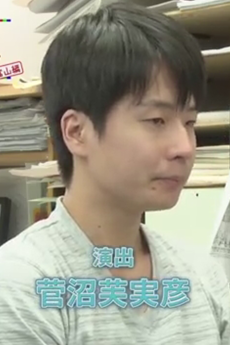 Fumihiko Suganuma
Director
Fumihiko Suganuma
Director
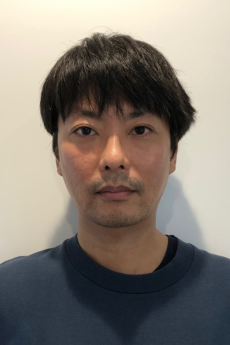 Hiroshi Seko
Series Composition
Hiroshi Seko
Series Composition
 Satoshi Ishino
Character Design
Satoshi Ishino
Character Design