Ruri Dragon
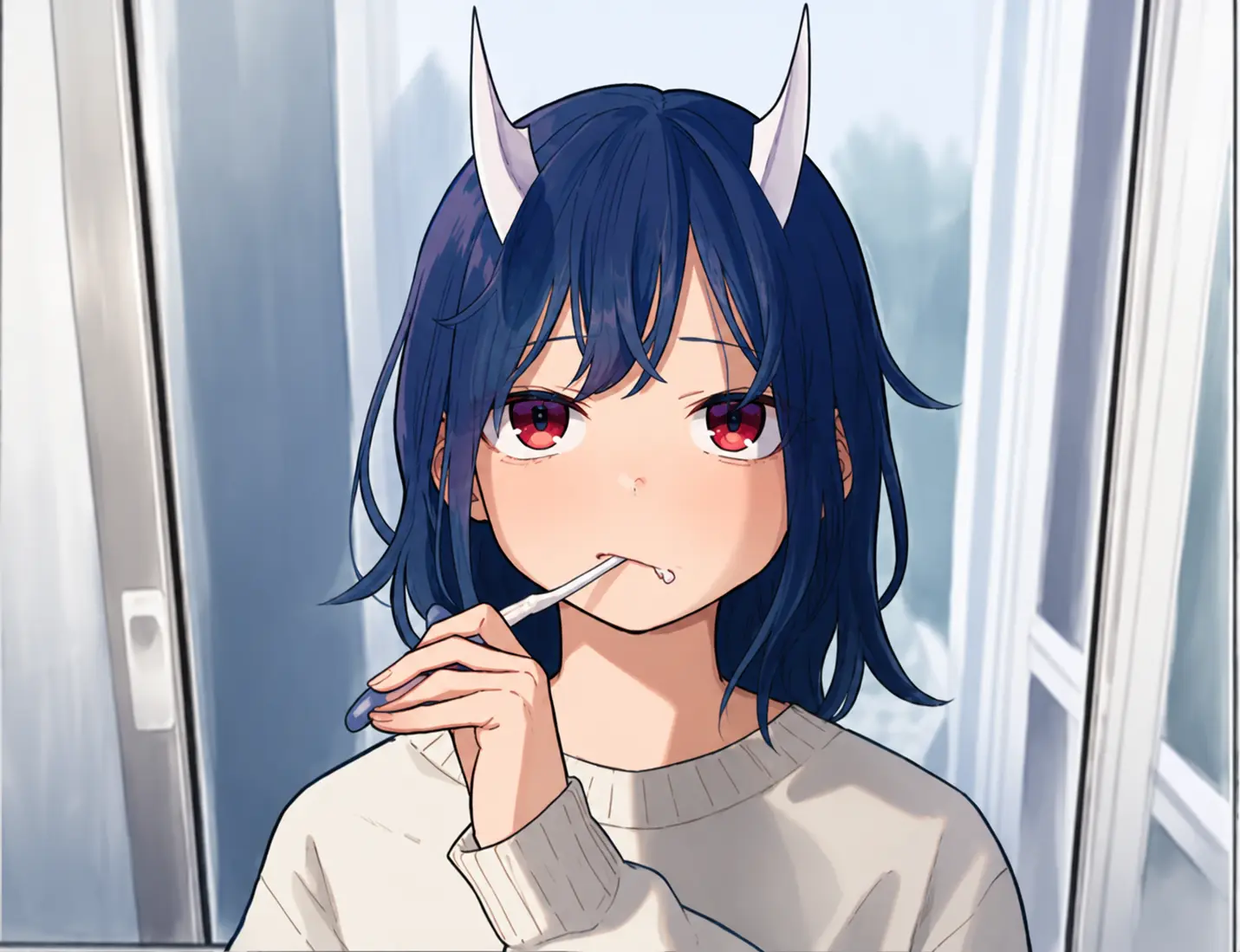
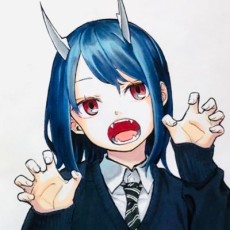
Ruri Aoki is a shy, ordinary fifteen-year-old — until she wakes up one morning with two white horns growing from her head. Her mother's explanation is calm and matter-of-fact: Ruri's father is a dragon, making her a half-human, half-dragon hybrid. Written and illustrated by Masaoki Shindo, RuriDragon (Japanese: ルリドラゴン) follows Ruri's attempt to keep living a normal high school life while her body has other plans. Published by Shueisha in Weekly Shōnen Jump, licensed in English by VIZ Media, with a Kyoto Animation anime announced in December 2025.
The Morning Everything Changed
Ruri spent fifteen years as a completely normal, self-contained loner with almost no close friends outside of middle school. Then the horns appeared. Her mother Umi delivers the explanation over breakfast without panic: Ruri's father is a ryu, and these physical changes are just the beginning. Ruri goes to school anyway. She is immediately surrounded by curious classmates. During class she accidentally breathes fire for the first time — her human throat hasn't adapted to the heat, she coughs up blood, and faints. From that point on, her life is a biological emergency with a school schedule attached.
Powers She Never Asked For
Ruri's primary goal throughout the series is to act "as normal as possible" and graduate. Her draconic biology has no interest in that. She lacks the regulatory organs pure dragons use to manage their energy output, so every new trait arrives as an uncontrolled misfire rather than a usable ability. Her Daemonfire scorches her own throat. Her Electrostatic Discharge zaps anyone who touches her. Her Venom manifests as a toxic substance she vomits under stress. Her Frost drops her body temperature to dangerous lows. Each trait is a crisis before it becomes a power, and the body absorbing them was never built for the load.
The People Around Her
Yuka Hagiwara is Ruri's oldest friend and commute partner — she treated Ruri as normal before the horns and hasn't changed. Akari Maeda is the blunt committee chair who tells Ruri to her face that she doesn't like her, which turns into the series' most important friendship. Takemoto Sensei is her homeroom teacher and, as revealed in Chapter 23, an undercover monitor for the government agency managing dragon-human relations. Airi Kashiro is her academically capable classmate and neighbor who tutors her through the absences. Umi, her mother, is the one person with ties to every part of Ruri's world — the dragons, the doctors, the school.
Where It Goes
When Ruri enters a "Spurt" — a period of rapid draconic maturation her body can no longer contain in a classroom — she takes a leave of absence and travels to Mount Ontake in Nagano, where actual dragons live in seclusion. The dragon she meets there attacks her immediately. It is the first time in the series that her situation stops being awkward and becomes genuinely dangerous. The latest chapter ends with Ruri at the summit, smoking from the encounter, finally saying out loud: "Cuz come to think of it... I'm a dragon too."
The World
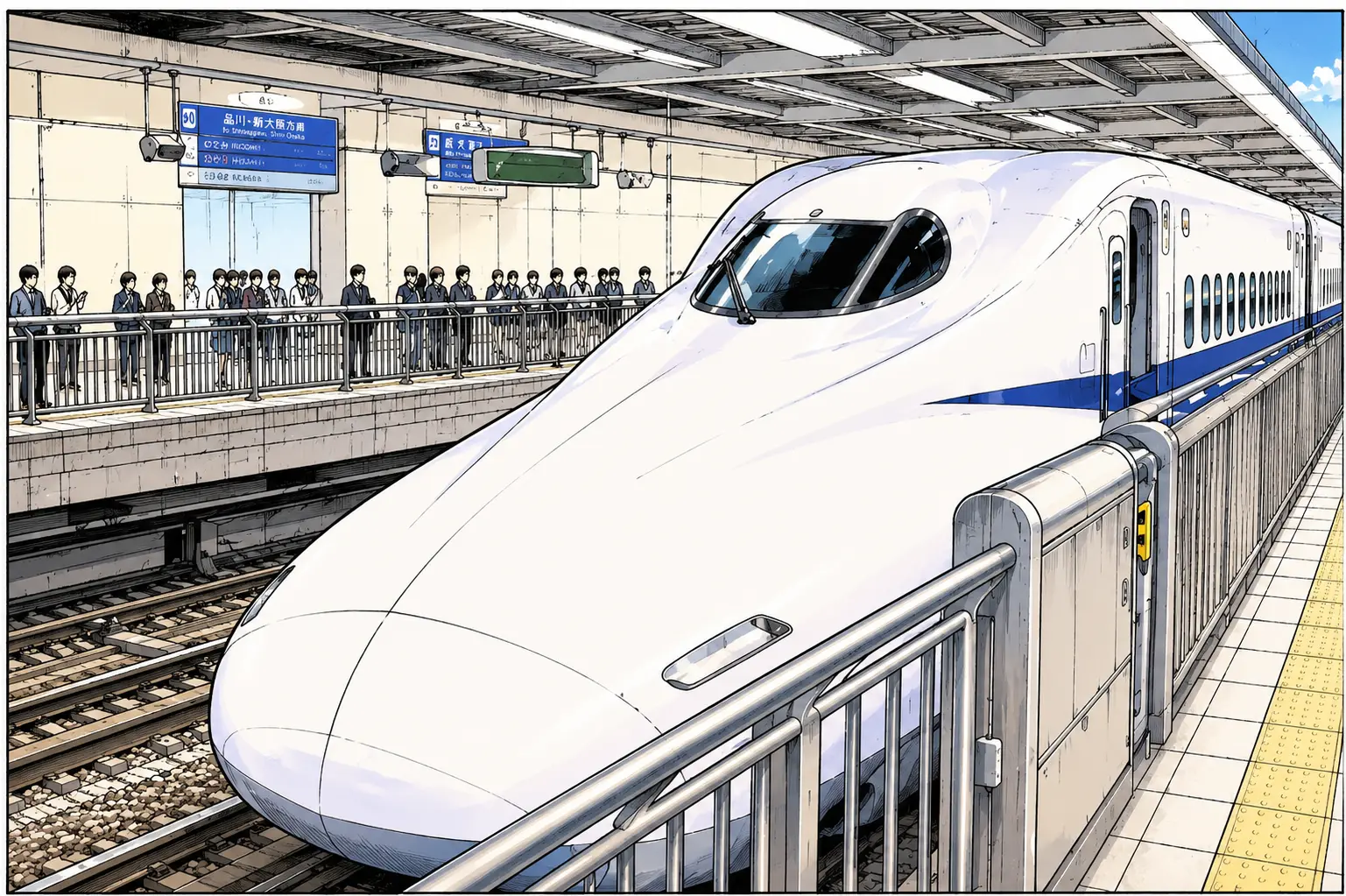
Contemporary Japan — smartphones, Shinkansen, Starbucks — with one invisible layer underneath: dragons are real, they nearly destroyed the world, and a government treaty is the only thing keeping the arrangement intact. Almost nobody knows. The average high school student thinks dragons are fictional. Ruri's homeroom teacher is a state monitor. Her doctor has prior experience with dragon biology. Her class found out because she sneezed fire at her desk in Chapter 1.
Who Knows What
Knowledge about dragons follows a strict hierarchy. The general public treats them as fantasy — Ruri's classmates initially assumed her horns were hair bands or part of a science experiment. Government bodies and specialists have exhaustive data: the Bureau of Anomalous Information Management tracks every hybrid, and medical facilities like Sugano Hospital are staffed with personnel trained to handle nonhuman biological material. The dragons themselves are aware of human society and bound by treaty to stay out of it.
Key Locations
Kuromata High School
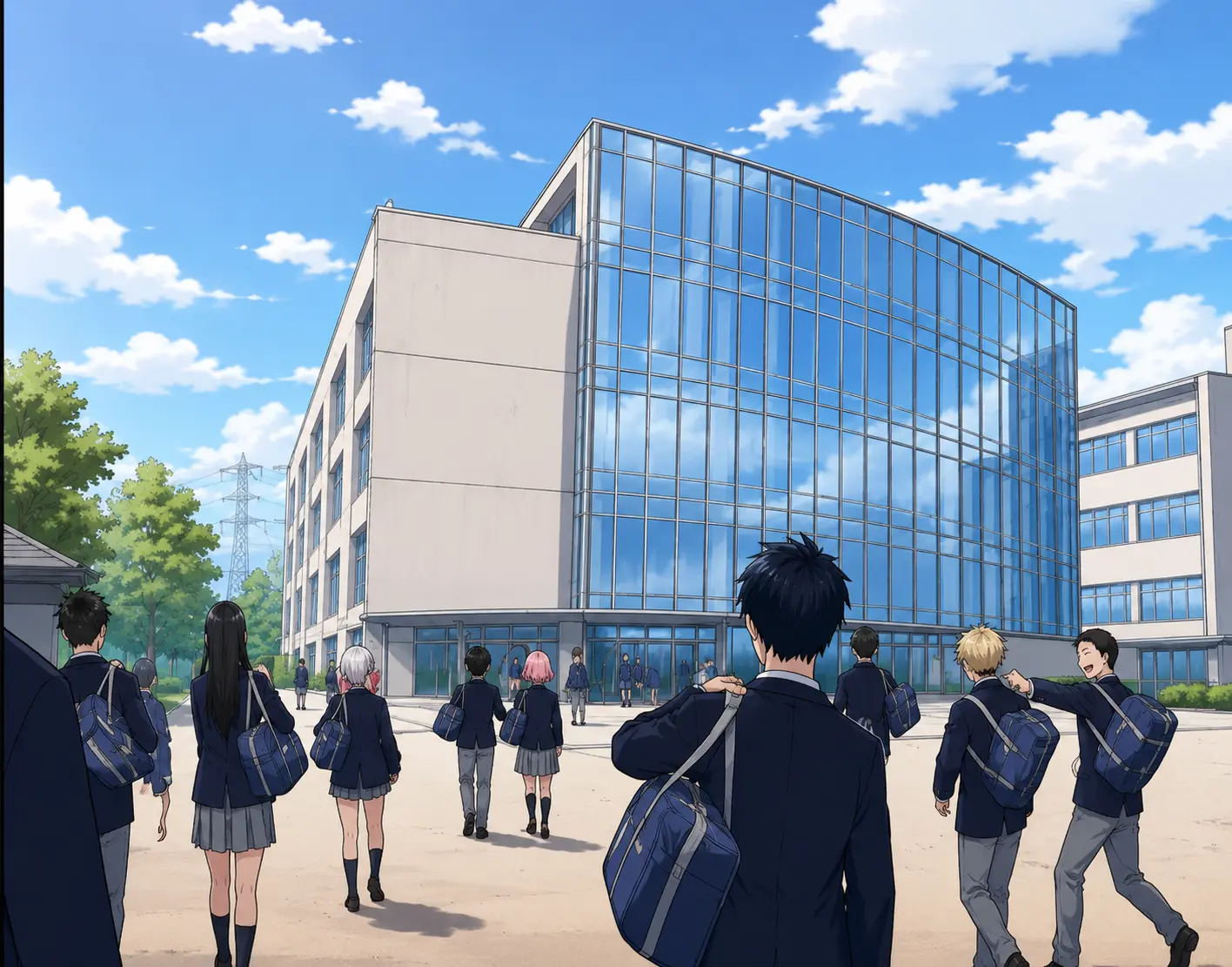
The primary setting. A standard secondary school that becomes the first real test of dragon-human coexistence at the individual level. The school board drafted formal Ground Rules specifically for Ruri: powers can only be used with Takemoto Sensei's permission, fire-breathing is banned in most circumstances, and misfires carry suspension risk. A government cleanup crew in hazmat suits has already been deployed here once.
Mount Ontake (Kagakure Mountain)
A reclusive dragon sanctuary in the Nagano region, accessible via Kiso Fukushima Station. Marked with "Unauthorized parties keep out" and "Intersector/Staff Only" signage. This is where the series goes when it becomes a high-fantasy story — where Ruri has to face what she actually is rather than what she wants to be.
Sugano (Kanno) Hospital
Run by a friend of Umi's from college who has experience with dragons. Ruri undergoes weekly blood draws here to monitor her venom levels and overall biological stability. Her draconic condition is handled as a clinical matter — panels, follow-ups, lab results.
Spo-cha (Sports Complex)
A standard recreation center used as an impromptu training ground in Chapter 8. This is where Ruri first learns that physical exercise vents her electrostatic buildup — and where Umi professionally demolishes her in every sport they try.
The Nonaggression Pact
At some point in the past, dragons were actively trying to destroy the world. The specific events that ended that are not detailed in the series. The result is a formal Nonaggression Pact: dragons vowed not to wield their powers, humans agreed to coexistence, and the Bureau was established to maintain the arrangement. The Pact is described as a "blood pact." Dragons now live in isolated sanctuaries like Mount Ontake. When Ruri accidentally influenced a typhoon in Chapter 43, another dragon took action behind the scenes to balance the climate — because even a hybrid misfire can have global consequences.
The Bureau of Anomalous Information Management
A clandestine government agency that operates through three mechanisms: undercover monitors embedded in public institutions (Takemoto Sensei), medical oversight through affiliated hospitals, and Cleanup Crews deployed after biological breaches. They issued Ruri the designation "Double No. 1" to bring her into a formal legal framework. As of Chapter 47, the Bureau is still learning alongside Ruri — there is no existing protocol for what she is.
Social and Legal Rules Governing Ruri
The Provisional Grade Council established the rules Ruri operates under at school: draconic traits require Takemoto's explicit permission to use, fire-breathing is forbidden in almost all circumstances, physical contact rules exist to prevent accidental static discharge or venom exposure, and she is held to the same academic standards as every other student. Outside school, she attends weekly medical appointments and is subject to Bureau oversight at all times.
Technology and Dragon-Specific Adaptations
The setting is modern-day Japan with no fantastical technology. The only dragon-specific adaptations are practical workarounds: Antistatic Bands (anti-zap bracelets) Ruri wears to prevent her electrical discharge from leaking into her environment, and the biological adaptation of condensing Daemonfire into the eyes — a maturity marker that allows focused heat output without burning human throat tissue. When her Spurt made school attendance too dangerous, Ruri attended classes remotely via laptop.
Everyday Life
Ruri's mornings involve brushing her teeth and finding new traits in the mirror. She still takes end-of-term exams. She goes to Starbucks. She eats convenience store hot dogs. The series treats every draconic development — a Cleanup Crew arriving at school, a government document being issued, a body temperature dropping to 52°F — with the same bureaucratic matter-of-factness as a sports festival or a homeroom announcement. The mundane never stops being mundane. It just has to make room for the dragon stuff.
Power System
How Powers Work
Dragon abilities in RuriDragon are biological, not magical. They are genetic traits inherited from a pure dragon parent, dormant until a biological threshold is reached. Ruri appeared fully human for fifteen years before her genetics activated. Once they do, traits arrive in waves — sometimes gradually, sometimes all at once during a period called a "Spurt." There is no training montage that unlocks them. They show up, they cause damage, and then the body has to figure out how to survive them.
Pure Dragons vs. Hybrids
Pure dragons possess specialized regulatory organs that meter their energy output. Hybrids have none of that infrastructure. Ruri's abilities don't develop gradually — they detonate. Pure dragons are classified as "world busters" capable of devastating climate alterations. Hybrids inherit a fraction of that power, which is still enough to freeze a school pool solid or accidentally influence a typhoon.
Passive vs. Active Skills
Passive skills are constant biological functions that require no conscious effort — rapid healing (wounds close in roughly two days), accelerated hair growth, high metabolism, and Dragon Sense. Active skills must be consciously triggered and carry a higher physical cost — fire breath, frost, and lightning fall into this category.
The Six Manifested Traits
Horns — Central Regulator
The first trait to appear (Chapter 1) and the core through which all other energy flows. They regrow overnight if broken or cut. When Ruri's emotional state is elevated, they shift into a jagged "Limit Form." Malformed growth causes debilitating migraines — corrected in Chapter 21 when the misshapen "baby horns" were removed, allowing stronger ones to grow back.
Fire Breath (Daemonfire) — Active
The signature trait of the ryu species — an "undying flame." First manifested in Chapter 1 as an accidental sneeze that caused Ruri to cough up blood, because her human throat wasn't built for it. Gained control by condensing the heat into her eyes, which allows focused output without burning internal tissue. Water acts as a suppressor — immersion temporarily seals the flames.
Electrostatic Discharge — Passive/Active
A fragment of the larger "Weather Control" trait pure dragons possess. Manifested in Chapter 8 during physical exercise at Spo-cha. The body continuously pulls static from the surrounding air — hair stands on end, anyone who makes contact gets zapped. Managed via Antistatic Bands and regular physical exertion to vent the buildup. After a major discharge like calling lightning, that outlet enters a mandatory cooldown period.
Venom — Passive
A self-defense mechanism that manifests as a toxic nonhuman substance Ruri vomits when her body is under physical stress. Medically classified as resembling toad venom. First misfire (Chapter 19) triggered a full Bureau Cleanup Crew response — hazmat suits, full sanitization of the school gym. Classified as a "gray zone" biological toxin.
Frost (Deep Chill) — Active
Generates and commands ice at will. Before mastery, caused Ruri's body temperature to drop to 52°F and froze surrounding objects without warning — bathroom stall doors, tea bottles. Brought under control in Chapters 33–34 through a brute-force session at the school pool: she attempted to freeze the entire pool in one go, raised her core output to maximum, and found the off-switch. Result: a large ice dragon head sculpture and functional control of the trait.
Dragon Sense — Passive
A painful, tingly physical sensation that activates when near other ryu. Less a power than a biological alarm. When the other dragon is radiating strong emotion — like the hostile black dragon at Mount Ontake — the sensation is debilitating enough to impair movement and breathing.
Mastery Progression
Every trait follows the same stages. First: involuntary misfire, usually causing internal damage. Second: the Spurt phase, where energy builds to dangerous levels and has to be discharged before it overwhelms the body. Third: brute-force adaptation — the user exhausts the trait at full output to locate the off-switch. Fourth: cooldown, where the specific outlet is temporarily unavailable after a major discharge. There is no shortcut. The body has to live through each stage.
Physical Costs
Fire breath initially causes internal bleeding until throat tissue adapts. Electrical and venom buildup is classified as poison for the body — causes nausea and migraines if not vented. Frost causes hypothermia before mastery. Active power use drains energy rapidly and requires increased hydration and rest. Using any active trait in rapid succession during the Spurt phase risks the body being overwhelmed entirely.
The Three Unknown Traits
Pure dragons possess nine confirmed traits. Ruri has manifested six as of Chapter 47. Three remain unnamed and unmanifested. The series has not indicated what they are.
Power Hierarchy
Ruri's father — a pure dragon seen only in silhouette — is capable of producing actual thunderclaps and weather-scale lightning. The hostile black dragon at Mount Ontake, described as the smallest documented ryu, fires energy blasts that cause ground-shaking tremors. Ruri, as a hybrid, sits well below both: she can lift heavy objects, freeze a pool, and fire back at a dragon — but she describes herself accurately as inheriting only a "fraction" of what her father carries.
Bureau of Anomalous Information Management (BAIM)
A clandestine government agency and the most powerful institutional force in the series. Their job is to manage dragon-human relations, control public information about draconic activity, and ensure the Nonaggression Pact holds. They operate through three mechanisms: undercover monitors embedded in public institutions, medical oversight through affiliated hospitals, and tactical Cleanup Crews deployed after biological breaches. Director Isshin Kyogoku heads the Bureau — his name appears on Ruri's classification paperwork but he has not appeared in person as of Chapter 47.
Their most significant action in the story is issuing Ruri's "Double No. 1" designation in Chapter 32 and coordinating her Mount Ontake visit during the Spurt. Takemoto has indicated the Bureau "would prefer" she remain integrated in human society rather than join the dragons.
Kuromata High School
A standard secondary school that became the first real-world test of dragon-human coexistence at the individual level. Leadership sits with Vice Principal Gunji and the Provisional Grade Council, who drafted a formal set of Ground Rules specifically for Ruri: powers require Takemoto's permission, fire-breathing is banned except under controlled conditions, physical contact rules exist to prevent venom or static exposure, and academic standards apply regardless of biological circumstances. The school treats Ruri as a student first — a "classmate, not a specimen" — while relying entirely on Takemoto and the Bureau to handle anything that exceeds its institutional capacity.
First-Year Sports Week Action Subcommittee
A student-run logistics group responsible for the first-year portion of the annual sports festival. Chaired by Akari Maeda with Ruri as Vice-Chair — a position Ruri was recruited into by the Student Council specifically to give her a public role and help her "reintroduce" herself to the school. Members include Nakamura (subcommittee rep), Sato, and Yoshioka as a helper. Their most significant output was the "Carp Turning into Ryu" festival backdrop and the Chapter 29–31 relay race where Ruri used Daemonfire under supervision for the first time as a deliberate, helpful act rather than a misfire. This committee is the vehicle for almost all of Ruri's social development across Arcs 3 and 4.
The Ryu (Dragon Faction)
A reclusive species of "world busters" living in isolated sanctuaries under the terms of the Nonaggression Pact. They vowed not to wield their powers; in exchange, they are left alone. Key figures: Ruri's father, who lives apart from the family but communicates with Umi and arranged the Mount Ontake visit; the hostile black dragon at Kagakure Mountain, the smallest documented ryu and the first pure dragon Ruri encounters directly; and the tattooed man at the summit, whose affiliation is unknown but who appears to monitor and manage the dragon living there. When Ruri accidentally influenced a typhoon in Chapter 43, another dragon took quiet action to rebalance the climate without any human involvement — the Pact is self-policed from the dragon side as well.
The Aoki Family
Umi is the only character with active ties to every other faction: she communicates with Ruri's father, coordinates with Sugano Hospital, and manages Ruri's school life. When Ruri's Spurt made school untenable, it was Umi who made the call to go to Mount Ontake. Every faction interaction in the story passes through her in some form.
How the Factions Check Each Other
The Bureau and the Ryu maintain a formal, cold coexistence through the Pact — not friendly, but functional. The Bureau uses Takemoto to give the school professional oversight without exposing its full reach. The school keeps Ruri socially integrated, which the Bureau prefers. The Aoki family bridges the dragon and human sides in ways no institution can. When any part of this system strains — a misfire, a Spurt, a hostile dragon — the response involves all of them, whether or not they coordinate directly.
RuriDragon's narrative is structured as a slow, deliberate escalation — from domestic confusion to social anxiety to full draconic confrontation. The arc names below follow community convention, as Shindo has not officially titled them.
Arc 1: The Discovery Arc
The series opens in media res — Ruri clutching her new horns in the bathroom mirror, completely baffled. Her mother Umi's nonchalance sets the tone for everything that follows: the supernatural will not be treated as sacred or terrifying, but as a logistical problem. Ruri's return to Kuromata High with visible horns draws attention but not cruelty; her classmates are mostly just confused. The arc's key rupture comes when Ruri accidentally breathes fire during a sneeze, scorches her desk, and faints in class — forcing Umi to come to school and explain the situation to her teachers and peers directly. By the arc's end, the premise is established: Ruri's class knows she's a dragon hybrid, the school board is already drafting ground rules, and Ruri is trying to decide whether she can still belong here.
| Chapter | Title |
|---|---|
| 1 | "It's Got Nothing to Do with the Horns" |
| 2 | "See You at School" |
| 3 | "Actually a Dragon" |
| 4 | "Starbucks Is Scary" |
| 5 | "At Last, the Beast Is Slain" |
| 6 | "Can't Blame Her" |
Arc 2: The Adaptation Arc
With the initial shock absorbed, the series settles into its slice-of-life groove. Ruri finds that her classmates are more curious than afraid, and the arc traces her cautious re-engagement with school social life. She is recruited to the Sports Festival committee — not entirely by choice — and begins interacting with a wider cast including the cheerful Yoshioka and the perceptive Kashiro. Takemoto Sensei's true nature as a government monitor begins to come into focus, and the series introduces the broader concept of the "Nine Traits," establishing that Ruri's biological situation is going to keep evolving whether she's ready or not. The third trait — Electrostatic Discharge — manifests during a training day with her mother at a sports complex, connecting physical exertion to draconic power output for the first time.
| Chapter | Title |
|---|---|
| 7 | "Dragon Crap" |
| 8 | "To Play Hard" |
| 9 | "As Normal as Possible" |
| 10 | "Put It to Use" |
| 11 | "No Rest for High Schoolers" |
| 12 | "Making Something Fun for Everyone" |
| 13 | "Don't Need to Be Besties" |
| 14 | "I Wanna Learn About You, Maeda" |
| 15 | "Thanks for Waiting" |
Arc 3: The Social & Committee Arc
The most interpersonally dense arc of the series to date. Ruri's fourth trait — Venom — manifests in the school gym, triggering a full Bureau response: hazmat-suited Cleanup Crew, an official incident report, and a stark reminder that Ruri is classified as a "toxic organism in a grey zone." More importantly, the arc delivers the series' most pivotal social confrontation: Ruri corners Akari Maeda at lunch and demands to know why she's been iced out. Maeda's blunt response — that Ruri doesn't care about other people — lands harder than any misfire. It forces Ruri to see herself as others do, and the resulting truce becomes the foundation of the series' most important friendship. The arc closes with the symbolic "Horn Pruning" scene, where Maeda snaps off Ruri's malformed "baby horns" with bolt cutters to relieve her migraines — an act of care that doubles as a public declaration of loyalty.
| Chapter | Title |
|---|---|
| 16 | "The Upsides of Dragonhood" |
| 17 | "Let's Draw Some Attention" |
| 18 | "Get People to Know You" |
| 19 | "A Nonhuman Substance" |
| 20 | "That Isn't Very Nice" |
| 21 | "Nothing Wrong with Some Venom" |
| 22 | "A Direct Hit" |
| 23 | "I'm a Dragon" |
| 24 | "Kinda Gross" |
Arc 4: The Sports Festival Arc
The 53rd Annual Kuromata High Sports Festival is the series' first major public event — and Ruri's first genuine test of social belonging. Serving as committee Vice-Chair alongside Maeda, she is no longer a passive observer but an organizer with responsibilities. The arc escalates when a classmate from another year insults Ruri, prompting Yoshioka to defend her in an obstacle relay race he loses anyway. More significantly, Ruri's horns shift into "Limit Form" during the relay, and she uses her Daemonfire — under supervision — to help her class, marking the first time her power is deployed as a gift rather than a misfire. The arc closes with the formal delivery of her government designation: "Double No. 1." Ruri reads her own classification paperwork and chooses, explicitly, to stay in human society.
| Chapter | Title |
|---|---|
| 25 | "Was This Always on the Menu?" |
| 26 | "Is There a Matsuda from Class 4 Here?" |
| 27 | "Barely Weighs a Thing" |
| 28 | "Cold Karaage is Nasty" |
| 29 | "Walk on Eggshells" |
| 30 | "Aoki's Problem" |
| 31 | "Wish I Could've Stayed Normal" |
| 32 | "On One Condition" |
Arc 5: The Mastery & Training Arc
The fifth trait — Frost — arrives with a body temperature that drops to dangerous lows and surfaces that ice over without warning. Rather than waiting for it to stabilize on its own, Ruri takes a "brute-force" approach: she attempts to freeze the entire school pool in one concentrated effort, using the total discharge to find the "off-switch" for the ability. The arc also deepens the series' lore, with Umi providing Ruri with background on dragon biology, the history of the Nonaggression Pact, and hints about the "world-busting" scale of what she carries in her genes. By the end of the arc, Ruri has shifted from being reactive to proactive — she's no longer just surviving her traits; she's training them.
| Chapter | Title |
|---|---|
| 33 | "Turf" |
| 34 | "The Ice Type" |
| 35 | "I Hate Not Getting Stuff" |
| 36 | "Good Job Cooking with Those Claws" |
| 37 | "Don't Go Roasting Marshmallows of Your Own Accord" |
| 38 | "Better to Have One than Not" |
| 39 | "The True Ending" |
| 40 | "I'm on Board" |
| 41 | "We All Suck at Science" |
| 42 | "I'm Also a Fan of Shadowkat" |
Arc 6: The Mount Ontake Arc
The series' most dramatic tonal shift to date. Ruri enters a "Spurt" — a period of rapid genetic activation where her abilities surge beyond containment — and is forced to take a leave of absence from school. The solution her father arranges is to bring her to Mount Ontake (Kagakure Mountain) in the Nagano region, a reclusive sanctuary where actual dragons live, to give her body a reference point for the power it's trying to express. The "genuine article" Ruri encounters there is the smallest documented dragon on record — and it attacks her immediately, with a ferocity that makes every previous misfire feel like amateur hour. Running, evading, and eventually resolving to stop fleeing, Ruri fires back and survives through sheer draconic stubbornness. The arc ends at the summit, where a mysterious tattooed man oversees the sanctuary and the full weight of Ruri's inheritance — as a world-buster living in a human school — is finally made undeniable.
| Chapter | Title |
|---|---|
| 43 | "Leeep!" |
| 44 | "Gradation" |
| 45 | "We're Headed for Mount Ontake" |
| 46 | "Quit Judging Your Past Self" |
| 47 | "Could I Pleeease Fire Off a Single Attack for Free?" |
1. Ruri vs. The Hostile Black Dragon — Mount Ontake
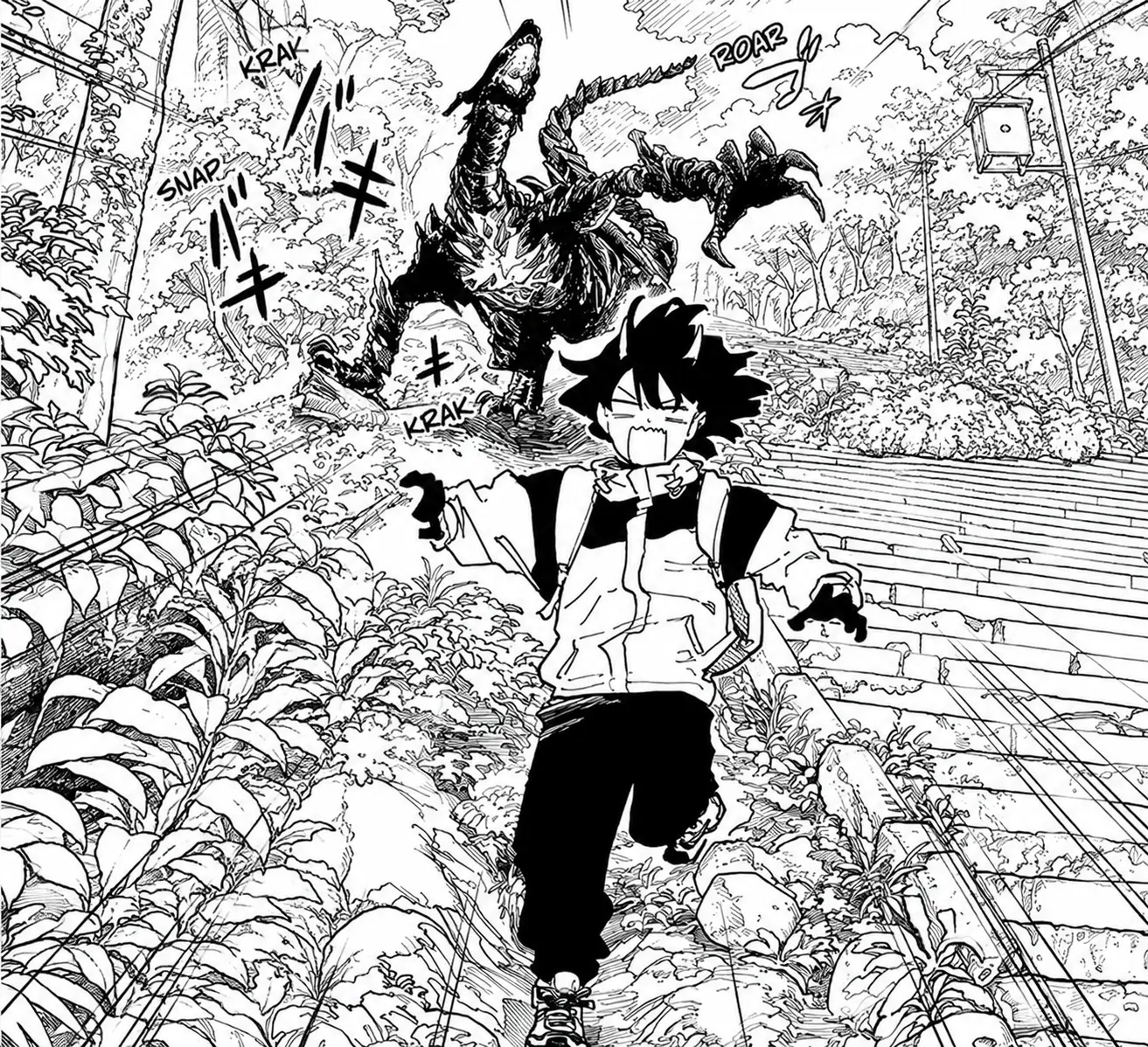
Ruri was brought to Mount Ontake to meet a pure dragon face-to-face to help manage her Spurt. The dragon — described as the smallest of all documented ryu — attacked immediately, with no preamble and no hesitation. Ground-shaking tremors, a massive energy blast fired from its mouth, and Dragon Sense exhaustion so severe Ruri could barely move. She spent most of the fight running and evading until she stopped. Her acknowledgment — "Cuz come to think of it... I'm a dragon too" — is the turning point. She demanded one attack for free and fired back. The encounter ends in mutual exhaustion, with Ruri smoking and barely standing. The tattooed man appears at the summit afterward. This is the only fight in the series where Ruri uses her power as a weapon rather than a utility, and the only time her situation becomes genuinely life-threatening.
2. Ruri vs. Akari Maeda — The Lunchroom
Maeda had been icing Ruri out. Ruri, tired of people treating her carefully, cornered her at lunch and demanded a direct answer. Maeda gave her one: "The fact is, I don't like you... cuz you don't care about other people." Ruri had no counter. She had always read her own loner tendencies as neutral — this reframes them as a choice that affected everyone around her. The confrontation ends in a working truce and sets the terms for everything that follows in their relationship. No abilities used. No physical contact. The most consequential scene in the series to date.
3. Maeda vs. Ruri's Horns — The Horn Pruning
Ruri's malformed "baby horns" were causing debilitating migraines by creating an internal biological imbalance. Maeda's solution: snap them off with bolt cutters so they regrow stronger. The procedure took place in front of the entire first-year committee — the horns were as hard as steel, and Maeda used her full body weight and Takemoto's bolt cutters to break them clean. Stronger horns grew back overnight. The migraines stopped. This is the first time Ruri trusted a peer with her physical safety, and the first time Maeda publicly put herself on Ruri's side in front of an audience.
4. Ruri vs. The Frost Trait — The School Pool
The Deep Chill was freezing Ruri's surroundings without warning — bathroom doors, tea bottles, her own body temperature dropping to 52°F. The approach: attempt to freeze the entire school pool in a single concentrated effort, raise the core output to maximum, and find the off-switch through sheer brute force. It worked. She produced a large ice sculpture of a dragon's head and came out of it with functional control of the trait. This is the first time Ruri approached a new ability proactively as a training problem rather than waiting for it to stabilize on its own.
5. Yoshioka vs. Homura Kagami — The Relay Race
Kagami from Class 2 called Ruri "Horns" and treated her as a monster during the sports festival. Yoshioka called it a "proper duel" and challenged him to the relay's anchor leg. The race involved absurd costume obstacles — wedding gown, maid outfit. Kagami won. Yoshioka finished fifth. But his refusal to back down in defense of a friend he was genuinely afraid of not long before is the point. Ruri's support system is not just people who tolerate her — it includes people who will lose a race on her behalf.
6. Umi vs. Ruri — Spo-cha
Umi's concern was that Ruri's blood wasn't pumping enough to vent her draconic energy. Her solution was to take Ruri to a sports complex and professionally demolish her in table tennis, batting cages, and every other activity available. Ruri ended the day physically broken. The exhaustion revealed the mechanics of Electrostatic Discharge for the first time — the link between physical exertion and electrical venting. Lowest-stakes confrontation in the series, but it established the biological rules that govern how Ruri manages her energy for the rest of the story.
Ruri's Conception and "The Colleague"
Ruri's mother Umi met her dragon father at age nineteen on a mountain, during a period when dragons were still "out to destroy the world." Ruri was born looking fully human and stayed that way for fifteen years. In Chapter 44, Dr. Kanno revealed that a "colleague" of his was specifically involved in Ruri's birth and that the process was not straightforward for Umi. Umi has told Ruri that "dragon reproduction doesn't work the usual human way" and instructed her to set the specifics aside for now. The identity of the colleague, the exact biological mechanism involved, and why a specialized medical professional was required for the birth of a child who appeared human — all of it remains unresolved. Relevant chapters: 1, 38, 44.
The "Double No. 1" Numbering
In Chapter 32, the Bureau issued Ruri her official designation: "Double No. 1." Takemoto explained it was meant to give her a defined identity within the system. He then added, almost offhand: "Or should that be No. 0?" That single question implies either a predecessor exists or the Bureau was already preparing for more hybrids before Ruri appeared. Takemoto confirmed it's "always possible that others like you will come about in the future." Whether Ruri is truly the first, or simply the first one brought under formal management, is not answered. Relevant chapter: 32.
The Tattooed Man at Mount Ontake
Before the climb in Chapter 46, Umi mentions that "someone else" should be at the summit monitoring the dragon and keeping it in check. After Ruri's battle in Chapter 47, a man with a prominent dragon sleeve tattoo on his right arm appears at the summit. He speaks to Ruri with familiarity — thanks her for making the climb, apologizes that she's barely in one piece. His name, affiliation, and relationship to Ruri's father or the Bureau are all unknown. His ability to remain in close proximity to a dragon radiating active bloodlust without apparent harm suggests he is not an ordinary person. Relevant chapters: 46, 47.
The Hostile Black Dragon's Connection to Ruri
Ruri was brought to Mount Ontake to meet a pure dragon face-to-face to help manage her Spurt. The dragon selected — described as the smallest of all documented ryu — attacked her immediately with no hesitation. In Chapter 47, Takemoto tells Umi that this particular dragon "has some connection" with Ruri. The nature of that connection is not stated. Whether it is a relative, a rival of her father, or something tied to the circumstances of her birth remains the series' current most significant open question. Relevant chapters: 45, 47.
The Three Unrevealed Traits
Pure dragons possess nine confirmed traits. Ruri has manifested six as of Chapter 47 — see the Power System section for the full breakdown. Three remain unnamed and unmanifested. Even the Bureau's own experts did not anticipate a hybrid inheriting traits to the extent Ruri has. Relevant chapters: 1, 12, 18, 32, 34, 45.
The Nonaggression Pact — What's Missing
The Pact exists and is described as a "blood pact" — but what actually led the dragons to agree to stand down, what specific powers they agreed to suppress, and what the consequences of violation would be are never detailed in the series. The history that precedes the current coexistence is one of the largest gaps in the lore. Relevant chapters: 15, 32, 38.
Director Isshin Kyogoku
Kyogoku's name appears as the signatory on Ruri's official Double classification paperwork in Chapter 32. He has not appeared in person in the series as of Chapter 47. His personality, motives, and the extent of his authority remain entirely unknown. Relevant chapter: 32.
Foreshadowing
In Chapter 2, Umi asks Ruri if she thinks there could be "stormy seas ahead" regarding her traits — directly foreshadowing Takemoto's later identification of her developmental phase as the "Stormy Period" or Spurt. In Chapter 35, Airi Kashiro notices Ruri's eyes glowing on a phone camera; Takemoto later confirms this was a biological marker of impending Spurt, proof her body was maturing as a ryu. In Chapter 15, Umi explains that calling lightning is just a "facet" of the larger Weather Control trait — foreshadowing Chapter 43, where another dragon had to intervene to balance out the typhoon Ruri accidentally influenced.
Fan Theories With Textual Support
Other hybrids exist or existed: Supported by the "No. 1" designation, Takemoto's "No. 0" comment, Dr. Kanno's colleague being specifically experienced with Ruri's birth, and Takemoto's acknowledgment that more hybrids may appear. Ruri serves a political function: Takemoto presents her with a binary — stay human or join the dragons — and notes that the Bureau "would prefer" she stay integrated. Her presence in human society may serve a specific stabilizing function for the Pact itself. The Bureau is containment, not protection: The Cleanup Crew in hazmat suits, the "toxic organism" classification, and the "Double" designation system all mirror protocols for hazardous materials management rather than welfare support.
What is RuriDragon about?
Ruri Aoki is a fifteen-year-old student who wakes up one morning with white horns growing from her head. Her mother explains that her father is a dragon, making Ruri a half-human hybrid. The series follows her attempt to keep living a normal high school life while her draconic biology — fire breath, lightning, venom, ice — manifests in uncontrolled bursts. It is set in contemporary Japan and treated with medical and bureaucratic realism rather than fantasy epic logic.
Who is Ruri's father?
A pure dragon, unnamed, seen only as a serpentine silhouette. He lives in a mountain sanctuary, communicates with Umi about Ruri's development, and arranged for Ruri to visit Mount Ontake during her Spurt. He is classified as a "world-buster" — capable of weather-scale destruction. He has never spoken to Ruri directly.
What powers does Ruri have?
Six of nine confirmed draconic traits have manifested as of Chapter 47: Horns (the energy core, regrow overnight), Daemonfire (fire breath), Electrostatic Discharge (static buildup and lightning), Venom (toxic fluid vomited under stress), Frost (ice generation), and Dragon Sense (painful detection of nearby ryu). All active powers cause physical exhaustion and require cooldown periods. Three traits remain unknown.
What is the Bureau of Anomalous Information Management?
A clandestine government agency that manages dragon-human relations and enforces the Nonaggression Pact. They monitor hybrids through embedded agents like Takemoto Sensei, oversee Ruri's medical data through Sugano Hospital, and deploy hazmat-suited Cleanup Crews after biological misfires. Director Isshin Kyogoku heads the Bureau but has not appeared in person as of Chapter 47.
What does "Double No. 1" mean?
"Double" is the Bureau's formal term for a human-dragon hybrid. Ruri is designated Double No. 1 — the first confirmed case brought under their legal framework. The numbering implies either she is the first hybrid to exist, or simply the first one they've formally managed. Takemoto's offhand "Or should that be No. 0?" suggests the Bureau isn't entirely sure either.
What is a "Spurt"?
A biological phase where a hybrid's draconic genetics activate in rapid, aggressive waves. Physical markers include glowing eyes and scale appearance. During a Spurt, the body accumulates more energy than it can safely contain — if not discharged, abilities run amok and can harm the hybrid or their environment. Ruri's Spurt forces her to take a leave of absence from school in Arc 6.
Who is Akari Maeda?
Chair of the school sports festival committee and Ruri's closest friend. She initially disliked Ruri for being a self-contained loner who seemed indifferent to others. Their lunchroom confrontation in Chapters 13–14 — where Maeda told Ruri exactly why she didn't like her — is the series' most important non-supernatural scene. She later snapped off Ruri's malformed "baby horns" with bolt cutters to relieve her migraines, and is the one person in the series who has never treated Ruri carefully.
What is the Nonaggression Pact?
A historical treaty between humans and dragons. Dragons were once classified as world-destroyers; the Pact ended that — they vowed not to wield their powers in exchange for a "vague pass" to live in isolated sanctuaries like Mount Ontake. The Bureau was established to maintain the arrangement. What led the dragons to agree, what powers they specifically surrendered, and the consequences of violation are never fully explained in the series.
What happens at Mount Ontake in Chapter 47?
Ruri travels to Kagakure Mountain during her Spurt to meet a pure dragon face-to-face. The dragon — the smallest documented ryu — attacks immediately with energy blasts and ground-shaking tremors. Ruri spends most of the fight evading until she stops running, acknowledges she is also a dragon, and fires back. She survives in mutual exhaustion. A mysterious tattooed man appears at the summit afterward. This is the first time Ruri uses her power as a weapon rather than a utility.
Why did Maeda break Ruri's horns?
Ruri's "baby horns" had grown in malformed, creating a biological imbalance that caused debilitating migraines. Snapping them off allowed stronger, properly formed horns to regrow overnight. Maeda did it with bolt cutters in front of the entire committee — it also functioned as a public statement that Ruri was not fragile, and it was the moment Ruri first trusted a peer with her physical safety.
- The one-shot was published on December 28, 2020 — the exact same date as protagonist Ruri Aoki's in-series birthday. When the anime was announced by Kyoto Animation on December 28, 2025, it was a deliberate callback to this detail.
- The voice comic adaptation of the one-shot, featuring Chiaki Omigawa as Ruri, accumulated over 2 million views on the official Weekly Shōnen Jump YouTube channel before the series was even serialized. By Volume 1's release it had surpassed 3.7 million views, making it the most-watched voice comic on the channel.
- Shindo has cited Chapter 4 of the series as their personal creative reference point — the chapter where they realized what kind of series RuriDragon was meant to be. Shindo uses it as a tonal compass during the writing process.
- The compiled tankōbon volumes contain a "staggering number" of dialogue and art revisions compared to the original magazine releases, per Shindo's own note in the volumes. Readers who followed the magazine serialization and then revisited the volumes will find meaningful differences.
- Shindo's stated creative origin for the series was a desire to make a visual representation of the idea that "being different is interesting," drawing on years of personal feeling of being unlike those around them.
- RuriDragon is the first manga published under the Shōnen Jump brand to receive an anime adaptation by Kyoto Animation — a studio known primarily for original productions and adaptations from light novels and 4-koma manga.
- Shindo published two prior one-shots in Weekly Shōnen Jump before RuriDragon: "Joreishi Rentarō no Yakusoku" (2017) and "Count Over" (2018). Both were praised for their battle sequences — a tradition the author deliberately stepped away from with RuriDragon.
- The in-universe name for Ruri's government designation — "Double No. 1" — implies either that the Bureau anticipated the existence of future hybrids or that Ruri is not, in fact, the first. The series has not resolved this ambiguity as of Chapter 47.
- A promotional video for Volume 3 was animated by the studio Coalowl and features original music from Zutomayo, released March 3, 2025.
- The series was licensed for Indonesian print release by M&C! in May 2025, expanding beyond its Japan and English-language availability.
- Ruri's blood type is listed as O, and her star sign is Capricorn (born December 28). Both are referenced in supplemental character data rather than the main story.
- The setting's fictional government organization — the Bureau of Anomalous Information Management — does not appear to have an in-universe acronym used colloquially. Fans refer to it as BAIM, though this abbreviation does not appear in the manga itself.
 Masaoki Shindou
Original Creator
Masaoki Shindou
Original Creator
 coalowl
Director
coalowl
Director