The Judge is an unnamed high-ranking official of the Heavenly Sphere — the man who sentenced Rudo Surebrec to death in Chapter 1, dropped him into the Pit, and as he fell, began to say his father's name. He appears in the series' first pages and in Rudo's flashbacks and memories. His name is unknown. His role is precise and permanent: he is the face of the system that exiled Rudo, and Rudo intends to return.
He presides over the Sphere's judicial system as its primary arbiter — the official who formally sentences those deemed unworthy of living on holy soil to permanent removal through the Pit. He has held this position for many years. He was present at the sentencing of Rudo's father, Alto Surebrec, and holds the classified records of the Undertakers — the historical information about the connection between the Sphere and the Ground that the Sphere keeps suppressed.
He is the first character in the series to explicitly connect Rudo to the term "Undertaker." He did this as a taunt, as Rudo was suspended over the abyss, to break his spirit before the fall. He did not break Rudo's spirit. He did, inadvertently, give him the first piece of the information he has been trying to recover ever since.
The Judge is an elderly man with short, light-coloured hair and small, dark, round-framed glasses that obscure his eyes — a design choice that reinforces his detached, bureaucratic presentation. His face carries the specific coldness of someone for whom delivering this particular sentence is administrative routine.
He wears the formal vestments of a high-ranking Sphereite official: a long, high-collared white robe with a prominent circular emblem on the back bearing a crescent moon-like motif — the symbol of the Sphere's institutional authority. The white is deliberate: clean, sanitised, entirely at odds with the act he is performing.
In his initial appearances, he is framed from low angles or from behind — visual choices that communicate his position as an immovable structure of law rather than a specific person with specific features.
The Judge is cold, procedural, and sincerely convinced that what he does serves a moral purpose. He does not experience his role as cruel. He experiences it as maintenance — the necessary removal of elements that defile the Sphere's holy soil. The language of his sentences is bureaucratic and religious simultaneously: "vilest of acts," "beautiful and holy soil," "filth." The sentencing is a ritual and he performs it with the composure of someone who has performed it many times.
Systemic Prejudice as Conviction
He holds genuine disdain for tribesfolk and those he considers criminal by lineage. His dismissal of Rudo's innocence was not negligence. It was a conclusion he had already reached: Rudo's blood was evidence enough, independent of the specific facts of the case. The system he administers does not require proof when heritage establishes the verdict in advance. He has administered this system long enough that he does not experience it as unjust.
The Cruelty Beneath the Procedure
As Rudo was suspended over the Pit, the Judge took the time to taunt him about his father — calling him the "son of a murderer" and beginning to disclose Alto Surebrec's name. This was not procedurally required. It was personal: the specific desire to ensure that Rudo understood the full weight of his inherited position before he fell. The cruelty was a departure from bureaucratic neutrality. He stepped outside procedure to ensure Rudo felt it.
The Sentencing of Rudo — Chapter 1
Following the murder of Regto — staged to frame Rudo — the Judge presided over the case. Rudo's pleas of innocence were dismissed. The Judge declared that Rudo's blood was proof of guilt, citing his heritage as the foundation of the verdict. He delivered the formal proclamation: "You have committed a serious crime on our beautiful and holy soil. Therefore, you are sentenced to death!"
At the edge of the Pit, suspended over the abyss, Rudo was given no appeal and no process. The Judge stood above him and chose to use the moment to taunt him about his father — beginning to say "Son of a murderer... If you want to know that badly... I'll tell you... your father's name was..." — before Rudo fell. He did not complete the sentence in time. Rudo fell without hearing the name. The sentence that was cut off became the question that drives the series.
Flashback — Alto Surebrec's Name
In a flashback retrieved later in the narrative, the Chapter 1 execution scene is revisited with enough detail to confirm that the Judge was about to disclose Alto Surebrec's name — Rudo's father — at the moment of the fall. The disclosure was not completed. The information the Judge was about to deliver remained in the Sphere's suppressed records, held by an official who has not yet had to account for what he knows.
Target for Rudo's Return
The Judge represents one of the primary institutional targets of Rudo's stated objective: returning to the Sphere to find Regto's true murderer and "make them apologize." He is the face of the false conviction, the voice that called Rudo a son of a murderer, and the person who holds the classified files on the Undertakers and Alto Surebrec's case. When Rudo returns — and the series has established he will — the Judge is part of what he is returning to.
- His name has not been disclosed. He is referred to as "The Judge" — his institutional function rather than his identity. The series does not give him a personal name, which is consistent with how he is framed: as a structure rather than a person, as the system's instrument rather than an individual making a choice.
- He was present at the sentencing of Alto Surebrec — Rudo's father — years before Rudo's own trial. This makes him one of the few living characters in the Sphere who holds direct knowledge of the Surebrec case, the Undertaker classification, and whatever the Sphere suppressed about that lineage. He has been carrying that knowledge for the entire narrative without being challenged on it.
- His white robes and crescent moon insignia are the series' most deliberate costume symbolism: the Sphere presents itself as clean, holy, and civilised. The man in white robes throwing a child into the garbage pit is the image that summarises what the Sphere actually is. The visual design makes the argument before any dialogue is required.
- He is the first character in the series to use the term "Undertaker" in connection to Rudo — doing so as a taunt, to ensure Rudo understood his inherited position as he fell. The word that became one of the series' central mysteries was introduced as psychological cruelty during an execution. He gave Rudo the question without intending to.
- The incomplete sentence — "your father's name was..." — is the series' most structural narrative withholding. The Judge had the answer. Rudo fell before receiving it. Everything that follows in the series is, in part, Rudo trying to get back to the person who was about to finish that sentence. The Judge did not mean to give Rudo a reason. He provided one anyway.
- He serves as the narrative gatekeeper between the series' prologue (the Sphere) and its main story (the Ground) — the last thing Rudo encounters before the world he has known disappears and the world the series takes place in begins. His verdict is what starts everything.
🇯🇵 Japanese Voice Actors
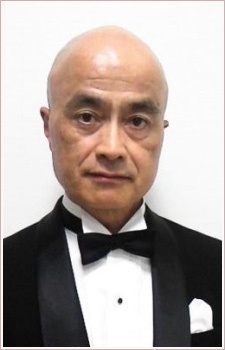 Iwasaki, Hiroshi
🇯🇵 Japanese
Iwasaki, Hiroshi
🇯🇵 Japanese