The character referred to as the Diner Patron — or the "Dapper Old Man" — is a minor recurring presence at Dan Dulse, a stylish eatery in the Ground. He introduces himself with the deliberate deflection of someone who has thought about how they wish to be categorised: "My name's not important. I'm just a dapper old man who likes stylish things."
He has no combat role, no Giver powers, no faction affiliation, and no plot significance in the conventional sense. What he has is a perspective — and the series uses that perspective to do something the main cast cannot do for themselves: show how the Cleaners look to the people they protect.
As a narrative vehicle, the Diner Patron represents ordinary Groundling society's relationship with Givers — not the heroic version, not the grateful civilian version, but the honest version: a man who finds them unsettling, refers to them as "those damn Cleaners," and wishes they would eat somewhere else so he could finish his stylish dinner in peace. He is one of Gachiakuta's most efficient pieces of world-building, delivered across a handful of panels.
The Diner Patron is an older man with a presentation that matches his self-description precisely. He is "dapper" in the specific way of someone who has spent years curating a look and maintained it into late middle age — well-groomed, unhurried in his dress, and visually exactly the kind of person who would choose Dan Dulse for its "stylish coiffed regulars" and be irritated when the ambience was disrupted by a table full of combat-weathered Cleaners.
The series does not linger on his specific features beyond what is necessary to establish him as a type rather than an individual — which is precisely the point. He is not meant to be a person the reader gets to know. He is meant to be recognisable: the comfortable civilian who has built a pleasant routine and resents anything that disturbs it.
The Diner Patron is a creature of taste, routine, and a very specific relationship with his own comfort. He frequents Dan Dulse not because it is close or affordable, but because it is "stylish" — the food is stylish, the staff is stylish, the regulars are stylishly coiffed, and the entire experience allows him to "wash away the fatigue of the day." This is a man who has built his civilian life around earned small pleasures, and who takes those pleasures seriously enough to be genuinely distressed when something disrupts them.
Refined Aesthete
He identifies himself primarily through his appreciation for stylish things — and this is not shallow. In the world of Gachiakuta, where most of the Ground's population is surviving rather than living, the Diner Patron represents a specific civilian achievement: someone who has built enough stability to have preferences, to cultivate taste, and to protect the small rituals that make daily life bearable. His love of Dan Dulse is, in its way, a form of the same impulse that drives Rudo to find value in discarded objects — both are assertions that quality of life matters. The difference is in what each of them considers worth protecting.
Genuine Unease Around Givers
His discomfort with Givers is not performed prejudice. He confesses that they "give me the willies" — and the confession is honest in the specific way of someone who has thought about why he feels this way and arrived at an answer he believes: Givers' psychological dependency on a "single object" strikes him as unnatural. He is not hostile in the way of someone who hates them. He is uneasy in the way of someone who finds their mode of existing fundamentally alien to his own. He cannot relate to people who have fused their identity with an object, whose whole self is expressed through and inseparable from a thing. He finds it strange. He wishes they were someone else's problem.
The Civilian Who Was Not Consulted
His reference to "those damn Cleaners" is the series' most honest acknowledgment that the Cleaners are not universally beloved. They are a military organisation operating in civilian spaces, carrying weapons into restaurants, and occasionally looking at people with what the Patron accurately identifies as extremely intense eyes. The fact that they save lives on the Ground does not make them comfortable to sit next to. The Patron represents everyone who benefits from the Cleaners' existence while preferring them at a significant distance.
During a dinner at Dan Dulse held by Team Akuta to welcome Rudo, the Patron observed each member from his table and assigned them labels based on their appearance and "vibe." His assessments are delivered with the unearned confidence of someone who considers himself a good judge of character, and they are — despite being entirely surface-level — not entirely wrong.
Enjin
The Patron clocks Enjin as a "hooligan with the tattoos" who has a "mean look in his eye." The assessment is unfair and accurate in equal measure. Enjin is not a hooligan — he is the most strategically sophisticated person in the restaurant. He is also a tattooed man who has spent a very long time fighting things that kill people, and the Patron is not wrong that this shows.
Zanka Nijiku
The Patron acknowledges Zanka as a "refined-looking fellow" — a reading that reflects Zanka's Hell Guard lineage and the specific polish that comes from a prestigious upbringing. But he still detects a "mean look" beneath the surface. Again: fair. Zanka is a refined fellow who has been to the edge of what a person can survive and keeps going back.
Riyo Reaper
He identifies Riyo as "the cute girl" — the most reductive possible reading of a former contract killer who fights with giant scissors wielded by her feet. He notes that even she shares the aggressive "mean look" of her companions, which slightly unsettles him. The gap between "cute girl" and "person who finds this read deeply flattering" is not one the Patron is equipped to navigate.
Rudo Surebrec
The Patron saves his most significant assessment for Rudo. After witnessing Rudo's reaction to Enjin's antics at the dinner table, the Patron is visibly shaken — recording internally that Rudo has "the meanest look I've ever seen in an eye!!!" The reaction is disproportionate to the trigger and entirely proportionate to what Rudo actually is: a fifteen-year-old carrying a specific quality of rage that has crystallised into something permanent enough that a stranger in a restaurant can feel it from across the room. The Patron cannot name what he is sensing. The series has a name for it: Rudo's Aura of Rage. Even civilians who know nothing about Givers or the Watchman Series register it instinctively.
- The Patron explicitly states that his name is not important — a self-aware meta-moment that acknowledges his function: he is a type, not an individual. The series uses him as a representative rather than a character with a personal arc, and he knows it.
- Dan Dulse is described as a "stylish eatery" — the specific kind of Ground establishment that implies at least some residents have built enough stability and comfort to support non-essential, aesthetics-forward dining. The Patron's patronage of it marks him as someone who has achieved a specific tier of Groundling civilian life above bare subsistence.
- His assessment of Team Akuta — delivered silently, from across the restaurant — is one of the most efficient pieces of outside-perspective characterisation in the series. He gets all four members in a few sentences and is wrong about none of them in the ways that actually matter.
- His reaction to Rudo specifically is the scene's most significant detail. He has already processed three Cleaners with varying degrees of unease. Then he looks at a fifteen-year-old eating dinner and experiences the strongest alarm response of the entire evening. This confirms that Rudo's aura is not a power-system metaphor — it is something physiologically legible to ordinary people who have no framework to name it.
- The Patron represents the civilian moral complexity that most shonen manga avoids: the people who benefit from the protection of an organisation without consenting to the psychological reality of what that organisation's members actually are. He is protected by the Cleaners and would prefer they protect him from farther away.
- His broader circle of Dan Dulse regulars shares his views — "a bunch of babies who can't let go" and "normal people like us will never understand their breed" — confirming that his perspective is not a personal quirk but a documented strain of civilian Groundling sentiment. The Cleaners are not universally beloved heroes. They are disturbing, useful, and best appreciated at a distance.
- In a series where the central thematic argument is that sincerity and genuine care create real power, the Diner Patron is the reader's reminder that from the outside, that same sincerity looks like obsession, instability, and a very mean look in someone's eye. Both readings are correct. That is the point.
🇯🇵 Japanese Voice Actors
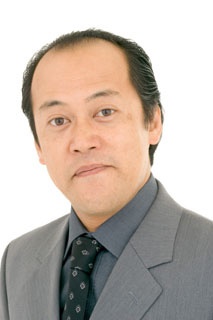 Tadano, Youhei
🇯🇵 Japanese
Tadano, Youhei
🇯🇵 Japanese
 Petersen, Dane
🇯🇵 Japanese
Petersen, Dane
🇯🇵 Japanese