Zanka's Father is the unnamed patriarch of the ultra-elite Nijiku family and one of the most quietly menacing presences in Gachiakuta — a man who never needs to raise his hand to cause damage. A former high-ranking Hell Guard, he now serves as Governor of the Kamuatari District in the North Ward, a position that comes with an almost feudal grip on the area. He is said to effectively "own" Kamuatari entirely.
He is the father of Kyoka, Goka, and Zanka Nijiku. His role in the story is not one of direct confrontation but of psychological consequence — the damage he inflicted on Zanka long before the series begins drives one of the manga's most compelling arcs about self-worth, effort, and the cruelty of being measured against an impossible standard.
The patriarch is a middle-aged man whose every physical detail communicates authority and rigid tradition. His dark hair is styled in a sharp, slicked-back manner, complemented by a well-groomed mustache and soul patch. His eyes carry a perpetual quality of evaluation — not warmth, not curiosity, but judgment.
He is depicted exclusively in traditional, formal Groundling clothing: a patterned yukata or kimono that signals his family's deliberate separation from the rougher aesthetics of the Ground at large. In flashbacks, he is almost always shown in formal seiza position inside the lavish Nijiku Mansion, framed by enormous murals depicting demonic and virtuous figures — a visual shorthand for the family philosophy he embodies. He doesn't need to stand to assert dominance. The posture, the setting, and the silence do that for him.
The patriarch is defined by a specific and deeply destructive kind of elitism — not the theatrical cruelty of a villain who enjoys causing pain, but the cold, principled certainty of a man who genuinely believes his family's bloodline places them above ordinary people, and that this belief gives him the right to dispose of anyone who doesn't meet its standard.
Lineage Above All
He treats the Nijiku family name as a sacred obligation, not a birthright to enjoy. In his view, the family's purpose is to govern the Ground, to hold rank in the Hell Guard, and to embody the "stalwart and virtuous" standard their ancestors established. This is not pride — it is a burden he expects his children to carry without complaint, and a verdict he reserves the right to hand down when they fail.
Zero Tolerance for Ordinary
He makes no distinction between inability and unworthiness. To him, "average" is not a developmental stage — it is a permanent verdict. When Zanka showed that he was not a prodigy in the way Kyoka and Goka were, his father did not wait for time to prove him wrong. He formally disinherited him, erasing Zanka from the bloodline a year before the series begins. That act of erasure — bureaucratic, calm, utterly without anger — is arguably more damaging than anything a more visibly cruel parent might have done.
Ruthlessness as Principle
What makes the patriarch genuinely unsettling is that he does not appear to act from malice. He acts from consistency. He holds himself to the same exacting standard he applied to his children. His rigidity is the point — and that is exactly what makes the damage he caused so complete. There is no moment of doubt to appeal to, no affection beneath the surface that might have been reached.
The Nijiku family's dominance over the North Ward is generational. For as long as the family records extend, they have produced Hell Guard members of significant rank — the kind of service that translates, eventually, into civil governance. The patriarch followed that path exactly. He served with enough distinction to earn the rank required to move from combat duty into political administration, eventually taking the governorship of Kamuatari, an elite North Ward settlement.
As a father, he oversaw the development of his three children with the same methodical discipline. Kyoka and Goka flourished — earning their own Hell Guard ranks early, becoming the embodiment of everything their father valued. Zanka did not. Whatever gifts he possessed, they were not the kind that registered as "genius" by the Nijiku standard. A year before the events of the series, the patriarch made his decision official and disinherited him. Zanka, effectively erased from his own family, eventually found his way to the Cleaners — a path that, whatever its hardships, may have been the only honest one available to him.
South Ward Arc — The Shadow in the Background
The patriarch does not appear in the present timeline during the Doll Festival arc, but his presence saturates it. When Zanka opens up to Team Akuta about his family, he describes them as "downright terrifying" — not with the exaggeration of someone processing a grudge, but with the flat certainty of someone who knows exactly what they are describing. The disinheritance, the silence that followed it, the life he had to rebuild without a family name — all of it traces back to one man's unyielding standard.
Flashback: The Nijiku Mansion
In memories surfacing through Zanka's recurring feelings of inadequacy — most explicitly in the context of Chapter 83, The Man Who Will Be Stronger — the patriarch appears in the mansion's formal room, seated in seiza, flanked by those enormous murals. His words to a younger Zanka are not a lecture delivered in anger. They are delivered as a statement of fact: Kyoka and Goka have already earned their ranks. Why has Zanka not done the same? The question carries no space for an answer. It isn't looking for one.
These flashbacks are short but they land with the specific weight of a memory that has been replayed too many times — each repetition cutting the same groove a little deeper into Zanka's sense of his own worth.
Zanka Nijiku — The Disinherited Son
The patriarch views Zanka as a "defective son" — not with cruelty, but with the clinical disappointment of someone who applied a standard and found it unmet. His rejection is the root of Zanka's lifelong inferiority complex: the persistent, gnawing belief that he is a "fake" compared to the genuine talent of his siblings. The tragedy in their dynamic is that the patriarch probably never lost sleep over it. Zanka has never stopped carrying it.
Kyoka Nijiku — The Eldest Daughter
Commander of Hell Guard Squad One, Kyoka is everything her father prizes in a descendant. She is the living proof of his philosophy — a Nijiku who reached the highest rank available and did it exactly as expected. Whether she shares her father's coldness toward Zanka, or simply follows his lead, is a thread the series has not yet fully pulled.
Goka Nijiku — The Eldest Son
Second-in-command of Squad One and the male heir the patriarch pointed to as the benchmark Zanka could never reach. Goka's excellence was used not to celebrate him but as a measuring stick held against his younger brother. In that sense, even Goka's achievements were weaponised — not by Goka, but by the man who raised both of them.
🇯🇵 Japanese Voice Actors
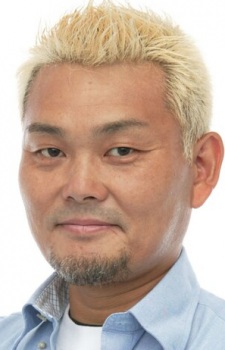 Egawa, Hisao
🇯🇵 Japanese
Egawa, Hisao
🇯🇵 Japanese
 Smith, Mike
🇯🇵 Japanese
Smith, Mike
🇯🇵 Japanese