Biography
- Affiliations
- Hero Association
- Occupation
- Hero
- Rank
- S-Class Rank 9
- Abilities
-
Cyborg Physiology
Tactical Transformation (Shogi-themed forms)
Energy Manipulation - Equipment
- Transformation Box
- Forms
-
Chariot (Tax)
Knight (Keima)
Bishop (Kakugyou)
Rook (Hisha)
Gold (Kin)
Silver (Gin)
Promoted Rook (Ryuu)
Promoted Bishop (Uma)
King (Ousho) - Manga Appearances
- One-Punch Man Chapter 29
- Anime Appearances
- One-Punch Man Episode 10
Metal Knight, known publicly only by his hero alias and privately as Dr. Bofoi, is a senior-ranked hero affiliated with the Hero Association. His role within the narrative of One Punch Man is atypical: he does not function as a frontline operative, public symbol, or moral exemplar. Instead, he exists as a structural authority whose decisions influence society at a systemic level.
Metal Knight’s significance lies not in visibility, but in control. His influence extends across infrastructure, defense planning, and reconstruction, positioning him as one of the most powerful individuals in the world despite his limited physical presence in the story.
Unknown origins and narrative intent
Canon sources provide no confirmed information regarding Dr. Bofoi’s early life, education, or formative experiences. This absence is consistent and intentional. Unlike many characters whose motivations are framed through trauma or personal history, Metal Knight is introduced without emotional context.
This lack of background shifts focus away from sympathy or identification and instead emphasizes function. Metal Knight is defined by what he does and how he thinks, rather than why he became the way he is. The narrative treats him less as an individual character and more as a manifestation of an ideology centered on control, preparation, and calculated risk.
Relationship with the Hero Association
Metal Knight’s affiliation with the Hero Association is best described as transactional. While officially registered as a hero, he does not adhere to standard expectations of availability, cooperation, or responsiveness. He operates with near-total autonomy.
The Hero Association relies heavily on his technological and logistical contributions, particularly in areas of large-scale reconstruction and defense. This reliance creates a dependency that limits the Association’s ability to question or regulate his actions. As a result, Metal Knight occupies a position of influence that exceeds his formal rank.
Operational independence
Metal Knight rarely appears in person and avoids direct involvement in joint operations. This is not portrayed as negligence, but as a deliberate operational choice. His methods prioritize distance, redundancy, and system reliability over improvisation or personal judgment.
By maintaining physical and emotional separation from crisis situations, Metal Knight minimizes unpredictable variables. This approach reflects his broader belief that human judgment, especially under stress, is inherently flawed.
Worldview and guiding principles
Metal Knight’s decisions are guided by a strictly utilitarian worldview. He evaluates situations based on long-term outcomes rather than immediate moral considerations. From his perspective, isolated losses may be acceptable if they reduce the likelihood of catastrophic failure in the future.
This philosophy places him in ideological opposition to heroes who prioritize individual lives, emotional response, or symbolic acts of heroism. Metal Knight does not reject the idea of saving people; he questions whether emotional heroism is an effective method of doing so on a global scale.
Public perception and distrust
Among civilians and fellow heroes, Metal Knight is widely regarded with suspicion. His absence during critical moments and his apparent lack of concern for immediate casualties contribute to an image of coldness and detachment.
Despite this distrust, society continues to depend on him. His role in rebuilding destroyed cities and reinforcing defenses creates a contradiction: he is both feared and relied upon. This dual perception reinforces his position as a necessary but unsettling presence.
Lack of accountability
One of the most significant concerns surrounding Metal Knight is the absence of effective oversight. His resources and technical expertise surpass those of the Hero Association’s leadership, making enforcement or restriction impractical.
Unlike political leaders or public figures, Metal Knight does not rely on public approval. His influence is exercised through systems rather than authority, rendering traditional forms of accountability ineffective.
Isolation as doctrine
Metal Knight’s isolation is not portrayed as a personal flaw but as a core element of his operational doctrine. He limits collaboration to reduce dependency and avoids emotional engagement to maintain objectivity.
This self-imposed isolation allows him to make decisions that others might find unacceptable. Whether this detachment constitutes clarity or moral failure remains an open question within the narrative.
Narrative role
Within the broader story, Metal Knight functions as a long-term variable rather than an immediate antagonist or ally. His actions shape the environment in which other characters operate, often without direct interaction.
He represents the tension between efficiency and empathy, raising questions about whether safety achieved through control can coexist with human values.
Current canonical status
As of the most recent manga developments, Metal Knight remains active and influential. His long-term objectives have not been revealed, and his moral alignment remains ambiguous.
No canonical material confirms hostile intent, nor does it fully validate his methods. His continued presence reinforces his role as an unresolved force within the story.
Legacy and thematic significance
Metal Knight’s legacy is defined by systems rather than symbolism. He embodies the risks inherent in concentrating power, even when that power is wielded by someone who believes they are acting rationally.
In a narrative filled with exaggerated personalities and overt conflicts, Metal Knight stands apart due to his plausibility. His character invites reflection on authority, responsibility, and the limits of calculation in protecting humanity.
Powers & Abilities
| Power | 62 |
|---|---|
| Speed | 64 |
| Technique | 82 |
| Intelligence | 96 |
| Cooperativeness | 50 |
Anime Appearances
Manga Appearances
No unique manga appearances found.
Voice Actors
Production Staff
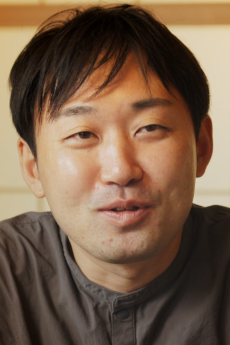 Shingo Natsume
Director
Shingo Natsume
Director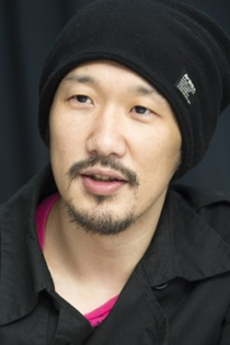 Tomohiro Suzuki
Series Composition
Tomohiro Suzuki
Series Composition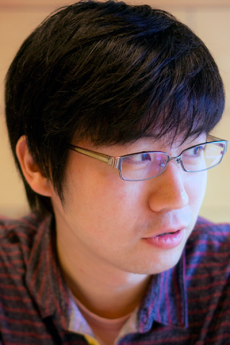 Chikashi Kubota
Character Design
Chikashi Kubota
Character Design