Death Note
Light Yagami, a genius high school student, finds a notebook dropped into the human world by the Shinigami (God of Death) Ryuk. The notebook, known as a Death Note, has the power to kill any human whose name is written in it, provided the writer has the person’s face in mind. If the cause of death is not specified, the victim simply dies of a heart attack. Light decides to use this power to purge the world of criminals and create an "ideal society" where he rules as the "God of the New World".
As mysterious heart attacks claim the lives of the world’s most brutal criminals, the public begins to refer to this unseen force as "Kira". Light’s "righteous judgment" soon attracts the attention of Interpol and the world’s greatest detective, an enigmatic figure known only as L. L identifies that Kira is operating from the Kanto region of Japan, setting off an almighty battle of wits between two brilliant minds, neither of whom knows the other’s name or face. To get closer to his target, L enrols at the same university as Light, and the two enter a tense cat-and-mouse game where every move could lead to exposure or death.
The conflict deepens with the appearance of a "Second Kira", a model named Misa Amane who possesses the "Shinigami Eyes" — the ability to see names and lifespans at the cost of half her remaining life. As suspicion on Light grows, he orchestrates an elaborate plan involving voluntary confinement, forfeiting his memories of the notebook to clear his name while a third party, the corrupt Yotsuba Group, continues the killings. This high-stakes gambit eventually allows Light to regain his memories, reclaim his power, and eliminate his greatest rival, L.
Years later, Light has joined the National Police Agency, acting as the new "L" while secretly continuing his work as Kira. However, his reign is challenged by L’s true successors, Near and Mello, who lead independent investigations to expose Kira’s identity. With new players and multiple notebooks in play, the battle escalates into a global struggle for control over the ultimate weapon of judgment. The series reaches its final climax in a face-to-face confrontation where every deception is unmasked, proving that in this game of life and death, there can only be one victor.
Death Note is set in a world built to look exactly like ours, down to real organizations like Interpol, the FBI, and the CIA getting pulled directly into the plot. Japan’s Kanto region is where the story starts, since that’s where the first investigation narrows Kira down to; the story later widens out to Winchester, England, home to an orphanage that raises gifted children as potential successors to the detective L, and to Los Angeles, where an American mafia syndicate gets pulled into the hunt for the notebook. By the time a global auction for Kira’s power is being run out of the United States, the story has made clear this isn’t a localized crime drama — it’s a story the entire world is watching.
That grounding is what makes the social shift land. Over roughly six years, Kira’s killings drop the global crime rate by 70% and stall most active wars, and entire governments respond in kind — several, including the United States, eventually stop pursuing Kira publicly, effectively backing off out of fear. A following calling itself “Kira’s Kingdom” forms around this shift, with supporters proclaiming “Kira is justice” on live television. Underneath all of it sits one settled rule of this universe: there is no Heaven or Hell. Every human, without exception, eventually goes to a state the story calls MU — nothingness — which means nobody in this world, Kira included, is operating under any afterlife-based consequence for what they do.
The Death Note runs on strict, mechanical rules rather than open-ended magic — every effect it has is bound by specific conditions.
The Fundamental Mechanism
- Writing a person’s real name in the notebook kills them — that’s the notebook’s only basic function.
- The writer has to picture the person’s face while writing the name, which is what stops two people who share a name from both being affected.
- If no cause of death is written within 40 seconds of the name, the death defaults to a heart attack.
- Once a cause is given, the user has 6 minutes and 40 seconds to add the specific details of how it happens.
The Shinigami Eyes
- A human owner can trade half of their remaining lifespan to a Shinigami for the “eye power” — the ability to see a person’s name and remaining lifespan just by looking at them.
- Seeing a name and lifespan this way requires a clear view of more than half the target’s face, from the nose up.
- Photos and video footage work for this; drawings never do, no matter how realistic.
- The eyes can’t read the wearer’s own lifespan, or the lifespan of anyone else who owns a Death Note.
Ownership and Possession
- A Death Note becomes human property the moment it touches the ground, and whoever picks it up first is its owner.
- The owner is haunted by the Shinigami who originally owned the notebook, until that Shinigami dies or the owner gives up the book — and only people who’ve touched the notebook can see or hear that Shinigami at all.
- Giving up ownership, or losing the notebook, wipes every memory tied to using it.
- Touching the notebook again temporarily brings those memories back, but they only become permanent once ownership is reclaimed.
Strict Constraints and Limitations
- A specified cause of death only takes effect if it’s something the victim could physically do, or could reasonably be expected to attempt — anything impossible just reverts the death to a heart attack.
- The notebook can’t be used to directly kill anyone whose name wasn’t written in it; if a written cause of death would end up killing more people than intended, it defaults to a heart attack instead.
- It has no effect on anyone under 780 days old, and can’t kill anyone 124 years or older, or anyone with less than 12 minutes of life left.
- Only six Death Notes are allowed to be active in the human world at once.
The Shinigami Factor
- Shinigami extend their own lives by writing human names into their notebooks, adding the victim’s remaining lifespan onto their own.
- The one exception breaks that entire system: a Shinigami who intentionally uses its notebook to extend a human’s life out of love or favor dies as a result.
- When a Shinigami dies this way, its body turns to dust, but the notebook itself survives for a human to find.
The Kira Task Force is what survives of a much larger National Police Agency operation after Kira wipes out the FBI agents sent to help it: six investigators — Soichiro Yagami, Matsuda, Aizawa, Mogi, Ukita, and Ide — who stay on the case and work directly under L out of a secret headquarters. After L’s death, Light takes the group over as the “New L,” using his own father’s team as cover for his double life as Kira.
Interpol convenes an early summit to confirm the Kira murders are real and formally backs L’s investigation, giving the manhunt international standing from the very start.
The FBI sends twelve agents into Japan at L’s request to secretly investigate NPA staff and their families. Kira identifies and kills all twelve, including agent Raye Penber, and the Bureau pulls out of the country for a time as a direct result.
Wammy’s House is an English orphanage run by Watari specifically to raise gifted children as candidates to succeed L. Near and Mello are its two standout products, and the rivalry between them carries most of the story’s second half.
The SPK is a team the U.S. government stands up in 2009 specifically to catch Kira without going through a compromised L. Near leads it, backed by career FBI and CIA agents including Commander Rester, Gevanni, and Lidner.
The Yotsuba Group is a Japanese conglomerate whose top eight executives get hold of a Death Note and use it to assassinate business rivals, with the explicit goal of making Yotsuba the biggest company in the world — a scheme Light exploits rather than exposes.
Mello’s mafia is an American crime syndicate Mello joins purely for its resources in hunting down Kira and the Death Note. Rod Ross runs it, and gang member Jack Neylon (Kal Snyder) becomes its own Death Note user.
Sakura TV becomes Kira’s first mouthpiece under director Hitoshi Demegawa, a true believer who turns the station into a machine for “Kira’s Kingdom” — the wider movement of supporters who chant “Kira is justice” on air.
NHN eventually replaces Sakura TV as Kira’s communication channel. Anchor Kiyomi Takada is personally selected, through Teru Mikami, to serve as Kira’s on-air spokesperson.
The United States government backs the SPK financially early on, then quietly stops pursuing Kira once his influence grows too large to challenge safely. In the “a-Kira” side story, its President even tries to buy Kira’s power outright, in a global auction that reaches 500 billion dollars.
The Lind L. Tailor Broadcast (Ch. 1–2) — L’s opening move: using a death-row inmate as an on-air decoy to bait Kira into killing on camera. Light takes the bait and kills the decoy, and L uses the exact timing of the death to narrow Kira’s location down to the Kanto region — the single move that turns an anonymous killer into a named target.
Rem Kills L and Watari (Ch. 58) — Cornered by Light into a choice between letting Misa be executed or dying herself, Rem writes the real names of L and Watari into her notebook. Both die of heart attacks within moments of each other, and Rem disintegrates into sand on the spot — the one trade that removes Light’s greatest opponent from the board for good.
The Capture of Kyosuke Higuchi — The Task Force and L bait the Yotsuba Group’s Kira, Higuchi, into a televised trap, then run him down in a high-speed car chase and arrest him on the spot. Light uses the chaos to reclaim the Death Note and quietly touch it, restoring the memories he’d erased of being Kira.
The Raid on Mello’s Hideout — After Mello kidnaps Light’s sister to force a trade for the Death Note, the Japanese Task Force storms his Los Angeles hideout. Soichiro Yagami gets Mello at gunpoint but hesitates; Mello detonates the building and escapes, and Soichiro is fatally wounded in the fighting.
The Yellowbox Warehouse Climax (Ch. 107–108) — Near proves Light is Kira by revealing he swapped the real Death Note for a fake one beforehand, so when Light’s proxy writes down every name in the room, nobody dies. A cornered Light is shot by his own subordinate, Matsuda, and finishes bleeding out when Ryuk, exactly as promised at their first meeting, writes Light’s name in his own notebook.
Light starts the story as a vigilante killing convicted criminals and ends it ruling as a shadow head of state, and the story treats that as one continuous slide rather than two separate choices — the same “achieve peace by force” logic just keeps escalating until there’s no line left for him to cross. A weapon that kills silently and untraceably removes every normal check on a person’s judgment, and Light’s genuine hatred of crime curdles into killing at a global scale specifically because nothing about the notebook ever forces him to answer for a single death.
The series never settles whether Light is right, and that’s deliberate — his popularity with the public is presented alongside every one of his atrocities, without either side cancelling the other out. The cult-like following that forms around him shows how a movement can calcify into genuine loyalty without a single member ever meeting the person they’re worshipping — devotion built entirely on a broadcast image, not personal contact.
Genius isolates almost everyone who has it in this story — Light and L, and later Near and Mello, are each defined by being smarter than everyone around them, and every one of them ends up more alone for it. The closest thing to real connection any of them get is with the person trying hardest to destroy them.
Arc 1: The L Arc (Manga Ch. 1–34 · Anime Ep. 1–14) — Light picks up a dropped Death Note and starts killing criminals under the name Kira, drawing the attention of the detective L, who narrows his identity down to a single region of Japan. A second Death Note user, model Misa Amane, complicates the hunt by falling for Light and using her own Shinigami-granted sight to identify him — forcing Light into a scheme where both of them agree to be placed under police confinement to clear their names.
Arc 2: The Yotsuba Arc (Manga Ch. 35–58 · Anime Ep. 15–25) — Still under suspicion, Light forfeits his notebook and, with it, every memory of being Kira, letting a corrupt group of Yotsuba executives keep the killings going in his absence and take the blame instead. Working alongside L as a genuinely memory-wiped ally, Light helps capture the Yotsuba Kira, then touches the notebook again to get his memories back. What follows closes the arc: he manipulates the Shinigami Rem into killing L and Watari to protect Misa, removing his single greatest threat.
Arc 3: The Near and Mello Arc (Manga Ch. 59–108 · Anime Ep. 26–37) — Years pass with Light running the investigation into his own crimes as the “New L” while secretly ruling the world as Kira. L’s two successors, Near and Mello, pursue him through separate and often conflicting methods, and it’s Near’s SPK that finally exposes him, proving his guilt with a notebook swap that leaves his proxy’s killings powerless. Cornered and shot by his own subordinate at an abandoned warehouse, Light dies at the hand of the one figure who was never on anyone’s side: Ryuk, fulfilling a promise made the day they met.
The series runs on layers of mystery stacked on top of each other — what the Death Note actually does, who is using it, and what everyone chasing that person is really after.
Supernatural and notebook mysteries. The global police initially assume the wave of heart attacks is either coincidence or a mass assassination campaign run by some large organization; L is the first to work out that it’s a single person who needs a name and a face to kill. How the Second Kira, Misa Amane, manages to identify Light without ever learning his name stays unexplained until Ryuk reveals the “Shinigami Eye” deal — a human can trade half their remaining life for the ability to see anyone’s name and lifespan on sight. Light’s claimed “innocence” during his 50-day confinement rests on a rule he had written into the notebook himself, stating that its user dies if they go 13 days without writing a name; the Shinigami Sidoh eventually reveals the rule is fake, undoing the alibi it was built to protect. Rem’s own secret — that a Shinigami dies if it intentionally extends a human’s life out of love or favor — becomes the mechanism Light later exploits to force her into sacrificing herself.
Identity revelations. L’s face and real name stay unknown for most of the first arc; he eventually reveals himself to the Task Force under the alias Ryuzaki, and it’s only later, through Near, that his origin at Wammy’s House — an English orphanage for gifted children — comes to light. During Light’s memory loss, a “Third Kira” surfaces inside the Yotsuba Group; the investigation traces the killings to executive Kyosuke Higuchi, exposing along the way how a Death Note can be handed off between owners to keep a killing spree running without interruption. After L dies, his two successors, Near and Mello, are revealed for the first time, and it’s their rivalry and opposing methods that carry the rest of the series. Near later deduces that Light is directing a proxy to carry out executions, and traces that proxy’s identity to Teru Mikami — a fanatical Kira worshipper receiving orders through spokesperson Kiyomi Takada.
Strategic revelations. One of the story’s bigger turns comes when Light touches the recovered Death Note and regains his memories, revealing that his entire confinement and the handoff of killings to Yotsuba had been a pre-planned strategy aimed at killing L from the start. The climax hinges on an even bigger one: Near didn’t just swap a few pages of the notebook, he had his agent Stephen Gevanni forge a perfect copy of the entire thing in a single night. That fake is what Mikami unknowingly uses at the Yellowbox Warehouse, and when nobody dies, Light’s identity is exposed in front of everyone. Near himself admits afterward that the plan only worked because of Mello’s unpredictable move to kidnap Takada, which forced Mikami to reveal where the real notebook was hidden — crediting the win to both of them, saying together they were “able to surpass L.”
Light and L spend most of the story trying to kill each other, yet the story keeps framing it as something closer to mutual fascination than pure hostility — L calls Light the only rival who’s ever kept pace with him, and the two even face off at a rigged tennis match just to read each other. Light’s reaction to Rem killing L reads as oddly personal, hinting he’s lost the only person who ever mattered to him as an equal.
Light and his father, Soichiro Yagami, form the emotional counterweight to that rivalry. Soichiro leads the actual manhunt for Kira for years without ever accepting his son could be guilty, and dies during the raid on Mello’s hideout still defending Light’s innocence — a faith the story never lets Light live up to.
Near and Mello are rival successors to L who never work together willingly — Near is cold and analytical, Mello impulsive and violent — yet their opposing approaches end up complementing each other, with Mello’s mafia connections supplying leads Near’s SPK could never have gotten on its own.
Misa and Light is an entirely one-directional bond. Misa’s devotion is genuine and total from the moment Light avenges her parents’ killer; Light, in turn, treats her as a resource — a second set of Shinigami Eyes he activates whenever the investigation needs them.
Rem and Misa is a protector-and-ward bond Rem takes on rather than chooses for herself, inherited from another Shinigami’s earlier devotion to Misa. She ultimately gives her own life enforcing it — the only Shinigami in the story who puts a human’s safety above her own.
Ryuk and Light is never a friendship, despite years spent side by side. Ryuk stays for entertainment, not loyalty, and the two only ever have one real agreement between them: the promise, made the day they meet, that Ryuk will be the one to write Light’s name once the story stops being fun to watch.
How does the Death Note actually kill someone? Writing a person’s real name while picturing their face causes their death. The full set of rules governing exactly how — timing, cause of death, physical limits — is covered in the Power System section above.
What happens if you don’t specify a cause of death? The victim dies of a heart attack by default, as long as no cause is written within 40 seconds of the name.
Can a Shinigami actually die? Yes, but only one way: by intentionally extending a human’s life out of love. Ordinary weapons don’t work on them at all.
What is “MU” in Death Note? It’s the story’s name for nothingness — where every human goes after death, since this universe has no Heaven or Hell.
Was the 13-day rule ever real? No. Sidoh reveals in Chapter 70 that it, along with the rule about the notebook being indestructible, was fabricated by a Shinigami for fun — a lie that had already shaped years of the investigation by the time it came out.
How many Death Notes can exist in the human world at once? Six. A seventh notebook simply won’t function until one of the active six is destroyed or returned to the Shinigami Realm.
Are there age limits on who the Death Note can kill? Yes — it can’t affect anyone under 780 days old or over 124 years old.
Why does Ryuk kill Light at the end instead of helping him? Because he told him he would. Ryuk was never Light’s ally, and their one real agreement, made the day they met, was that Ryuk would write Light’s name in his own notebook when the story stopped being entertaining.
Supernatural Rules & Limitations
- The “490-Day” Rule: if a user loses or has their notebook stolen and doesn’t retrieve it within 490 days, they permanently lose ownership and all associated memories.
- The notebook’s power isn’t limited to ink — any instrument that can leave legible letters on the page will work, including cosmetics or even human blood.
- No matter how many names are written in it, a Death Note never runs out of pages.
Shinigami Biology & Laws
- For Ryuk, apples are an addiction similar to cigarettes or alcohol for humans. Deprived of them too long, he suffers withdrawal symptoms — twisting his body into a pretzel and performing handstands.
- There are nine levels of severity for breaking laws in the Shinigami Realm. A God of Death who commits a crime above severity level 3 will be punished and killed.
- A Shinigami cannot be killed by human means, such as being shot or stabbed. The only known way for one to die is to intentionally extend a human life out of love.
- Shinigami don’t need to sleep, but those living in the human world are expected to diligently observe the human using their notebook — laziness here is considered a violation of their nature.
Character & Organizational Details
- Before becoming the world’s greatest detective, L used his brilliant mind and Watari’s help to invest in the stock market, growing his initial wealth by a factor of nearly 20,000 in just two years.
- Wammy’s House was founded by Quillish Wammy (Watari) in Winchester, England, specifically to raise gifted children as potential successors to L.
- According to a supporter questionnaire for “Kira’s Kingdom,” Teru Mikami’s most respected historical figure is Winston Churchill.
- To keep access to the notebook even under surveillance, Light modified a high-end watch — a graduation gift from his father — with a hidden compartment containing a scrap of Death Note paper.
The “Pilot” and Supplementary Lore
- In the original pilot story involving Taro Kagami, a “Death Eraser” could bring people back to life by erasing their names from the notebook, provided their bodies hadn’t been cremated yet. This concept was never used in the main 108-chapter series.
- In the “a-Kira” supplementary story, the Death Note was put up for a global auction where the President of the United States eventually won with a bid of 500 billion dollars. A new rule from the Shinigami King — that anyone who sells or buys the notebook will die — prevented the transaction from being safely completed.
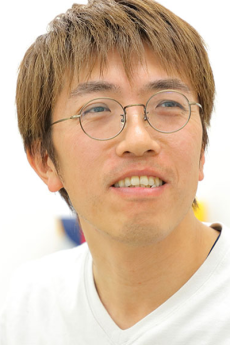 Tetsurou Araki
Director
Tetsurou Araki
Director
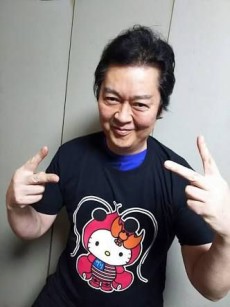 Toshiki Inoue
Series Composition
Toshiki Inoue
Series Composition
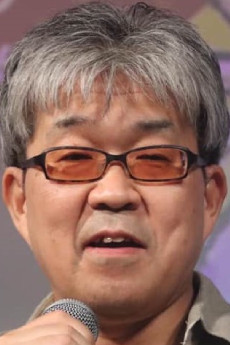 Masaru Kitao
Character Design
Masaru Kitao
Character Design